Flour processing is a crucial industry that has evolved significantly over the years. As a leading supplier of flour processing equipment, I’ve witnessed firsthand the development and application of different types of flour processing methods, particularly batch and continuous processing. Understanding the differences between these two types of equipment can provide valuable insights for flour manufacturers, enabling them to make more informed decisions based on their production needs. Flour Processing Equipment

1. Principle of Operation
Batch flour processing equipment operates in a discontinuous manner. In this system, a specific quantity (batch) of raw materials is loaded into the equipment at once. For example, a batch of wheat grains will go through the entire processing cycle—cleaning, grinding, and sifting—before a new batch is introduced. This cycle is typically carried out in a series of individual steps, with each step being completed separately for a single batch.
On the other hand, continuous flour processing equipment is designed to operate continuously. Raw materials are fed into the system at a constant rate, and the processing steps occur simultaneously and in a continuous flow. As the wheat grains enter the equipment, they move through various processing units one after another, with no interruption between batches. This continuous operation allows for a seamless production process.
2. Production Efficiency
One of the most significant differences between batch and continuous flour processing equipment lies in their production efficiency. Batch processing is well – suited for small – scale production or when the production volume needs to be adjusted frequently. Since the process is carried out in batches, it offers flexibility in terms of the quantity produced per batch. For example, if a small bakery only needs a limited amount of flour for a particular recipe, batch processing can produce the exact amount required without any waste.
However, when it comes to large – scale production, continuous processing equipment has a clear advantage. With its continuous operation, there is no time wasted in loading and unloading batches, which significantly reduces idle time. This results in a much higher production capacity. Continuous processing can run 24/7 with minimal interruptions, churning out large quantities of flour consistently. For large industrial flour mills that need to meet high – volume market demands, continuous processing is the preferred choice.
3. Product Quality Consistency
Product quality consistency is another area where batch and continuous flour processing equipment differ. In batch processing, each batch can be closely monitored and adjusted during the processing cycle. This allows for fine – tuning of the process parameters such as grinding time, moisture content control, and sifting fineness for each individual batch. As a result, the quality of the flour within a batch can be very consistent. However, there may be slight variations between different batches due to factors like raw material quality differences or minor adjustments in the processing parameters from one batch to the next.
Continuous processing equipment, on the other hand, is designed to maintain a high level of consistency across the entire production run. Since the process is continuous, the raw materials are subjected to the same set of processing conditions throughout. Advanced control systems are often used in continuous processing to monitor and adjust key parameters in real – time, ensuring that the flour quality remains stable over long periods of production. This makes continuous processing ideal for applications where strict quality standards need to be met consistently, such as in the production of flour for large food manufacturing companies.
4. Equipment Complexity and Cost
Batch processing equipment is generally less complex. It consists of a series of individual units that can be operated independently. This simplicity makes it easier to install, operate, and maintain. The initial investment cost for batch processing equipment is also relatively low, which is attractive for small – scale producers or those with limited budgets. Additionally, the maintenance and repair of batch processing equipment are often more straightforward and less costly, as individual components can be easily replaced or serviced.
Continuous processing equipment, however, is more complex. It requires a highly integrated system of multiple processing units that work in harmony. The installation of continuous processing equipment is a more elaborate process, often requiring professional engineering and technical support. The initial investment for continuous processing equipment is significantly higher due to its advanced technology and complex design. Moreover, the maintenance of continuous processing equipment can be more challenging and expensive, as any breakdown in one part of the system can disrupt the entire production process.
5. Flexibility in Product Variation
Batch processing offers greater flexibility when it comes to product variation. Since each batch can be processed independently, it is easier to change the recipe or processing parameters to produce different types of flour. For instance, a flour mill can quickly switch from producing whole – wheat flour to all – purpose flour by adjusting the grinding and sifting settings for the next batch. This flexibility is particularly useful for artisanal flour producers or those who need to meet the diverse needs of niche markets.
Continuous processing equipment, while excellent for high – volume production of a single type of flour, is less flexible in terms of product variation. Changing the production from one type of flour to another often requires significant adjustments to the entire system, which can be time – consuming and may result in production downtime. However, with the development of advanced control systems, some continuous processing equipment can now be more easily reconfigured to produce different types of flour, but it still generally lags behind batch processing in terms of flexibility.
6. Energy Consumption
Energy consumption is an important consideration in flour processing. Batch processing equipment typically consumes more energy per unit of production, especially when compared to continuous processing on a large – scale basis. In batch processing, the equipment needs to be started and stopped for each batch, which can lead to higher energy consumption during the startup and shutdown phases. Additionally, the individual processing steps in batch processing may not be optimized for energy efficiency as they are often carried out separately.
Continuous processing equipment, due to its continuous operation and optimized design, generally has lower energy consumption per unit of production. The equipment runs at a steady state, which allows for better energy management. The integration of various processing units also enables the sharing of energy sources and the recovery of waste heat, further improving energy efficiency.
Conclusion
In conclusion, both batch and continuous flour processing equipment have their own unique advantages and disadvantages. Batch processing is ideal for small – scale production, applications requiring high flexibility in product variation, and those with limited budgets. It offers good control over individual batches and can be easily adjusted to meet specific production needs.
Continuous processing, on the other hand, shines in large – scale production, where high efficiency and consistent product quality are paramount. It is well – suited for meeting the high – volume demands of the industrial market, although it requires a higher initial investment and more complex maintenance.
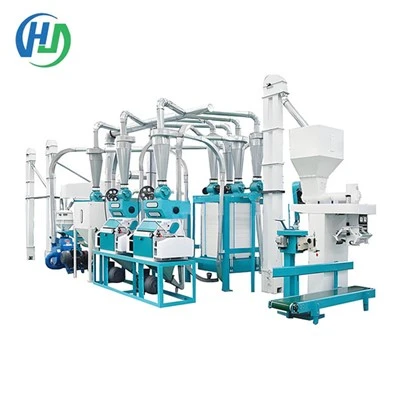
As a supplier of flour processing equipment, I understand that choosing the right type of equipment depends on various factors, including production volume, product quality requirements, budget, and the need for product variation. We are committed to providing our customers with detailed information and professional advice to help them make the most appropriate choice for their businesses.
Drying Machinery If you are interested in our flour processing equipment or have any questions about batch or continuous processing, please feel free to contact us for procurement and further discussions. We look forward to the opportunity to serve you and contribute to the success of your flour processing enterprise.
References
- Coulson, J. M., & Richardson, J. F. (1991). Chemical Engineering: Volume 2 – Particle Technology and Separation Processes. Elsevier.
- Earle, R. L., & Earle, M. D. (2003). Processing Foods: From Farm to Fork. Woodhead Publishing.
- Heldman, D. R., & Lund, D. B. (eds.). (2007). Handbook of Food Engineering. CRC Press.
Henan Huinong Machinery Co., Ltd.
Henan Huinong Machinery Co., Ltd. is one of the most professional flour processing equipment manufacturers and suppliers in China, featured by quality products and low price. Please rest assured to buy discount flour processing equipment from our factory. We also accept customized orders.
Address: No. 6, Northeast Corner of the Intersection of Renmin Road and Zhujiang Road, New District, Huaxian County, Henan Province
E-mail: frank.tang@huinongmachinery.com
WebSite: https://www.huinongmachinery.com/
