Hey there! I’m part of a deionized water system supply crew, and today, I wanna chat about something super important: the impact of temperature on the performance of a deionized water system. Deionized Water System
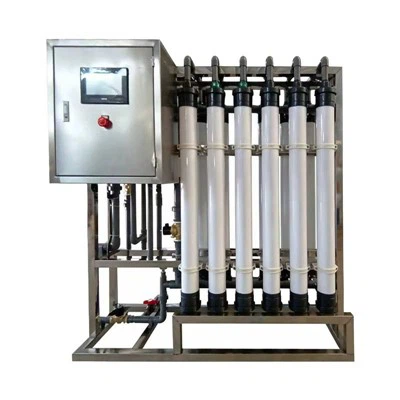
First off, let’s understand what a deionized water system does. It gets rid of ions from water, making it super pure. Industries like electronics, pharmaceuticals, and even power generation use it. So, it’s a big deal.
Now, temperature can change how well these systems work. Let’s start with the resin beds, which are a key part of the deionization process. Resins are like tiny sponges that soak up ions. When the temperature rises, the activity of the ions in the water goes up. This means the ions move around more quickly. On one hand, this can be sort of a good thing. The faster – moving ions are more likely to bump into the resin beads and get trapped. So, in theory, the deionization process can be a bit more efficient at higher temperatures.
But here’s the catch. Resins have a sweet spot when it comes to temperature. Most common ion – exchange resins work best between 40°F and 100°F (about 4°C to 38°C). If the water gets too hot, say above 120°F (49°C), the resin can start to break down. The chemical structure of the resin changes, and it loses its ability to hold onto ions. This means the deionized water coming out of the system won’t be as pure as it should be. And that’s a huge problem for industries that rely on ultra – pure water.
Another thing to consider is the flow rate. Temperature affects the viscosity of water. As the temperature goes up, the water becomes less viscous, which means it flows more easily. In a deionized water system, this can lead to a higher flow rate through the resin beds. If the flow rate is too high, the water might not spend enough time in contact with the resin. This results in incomplete deionization. The ions in the water don’t have enough time to get exchanged with the charged sites on the resin beads, so the water quality drops.
On the other hand, when the temperature drops, the water becomes more viscous. It flows more slowly through the system. This might seem like it could be good for deionization because the water has more time to interact with the resin. But slow flow rates can also cause issues. They can lead to a build – up of pressure within the system. High pressure can damage components like pipes and valves. Also, at very low temperatures, the chemical reactions that drive the deionization process slow down significantly. The resin may not be as effective at removing ions, and the overall performance of the system takes a hit.
Let’s talk about membrane – based deionized water systems too. These use membranes to separate ions from water. Temperature has a big impact on membrane performance as well. Just like with resin beds, high temperatures can damage the membranes. The polymers that make up the membranes can expand and lose their shape. This can cause tiny holes or pores in the membrane to widen. As a result, ions that should be blocked can pass through, and the purity of the deionized water is compromised.
Lower temperatures affect membrane – based systems in a different way. The reduced temperature can cause the water to form ice crystals in the membrane pores. This not only blocks the flow of water but also can physically damage the membrane. And once a membrane is damaged, it’s pretty much useless for producing high – quality deionized water.
Now, you might be wondering what can be done to manage the impact of temperature on a deionized water system. Well, one option is to install a temperature control unit. This can regulate the temperature of the water entering the system. By keeping the water temperature within the optimal range for the resin or membrane, you can ensure consistent performance.
Another thing is to monitor the system regularly. Keep an eye on the water quality coming out of the system. If you notice a drop in purity, temperature could be one of the culprits. Check the temperature of the water at different points in the system to see if there are any hot or cold spots.
Also, choosing the right components for your system is crucial. Some resins and membranes are designed to handle a wider range of temperatures. When you’re setting up a deionized water system, make sure you pick components that are suitable for the temperature conditions in your facility.
As a deionized water system supplier, I know how important it is to have a system that works well all the time. Temperature can be a real wild card, but with the right approach, you can keep your system performing at its best.
If you’re in the market for a deionized water system or need to upgrade your existing one, we’re here to help. We’ve got a wide range of systems that are designed to handle different temperature conditions. Whether you’re in a hot climate or a cold one, we can find a solution for you.
Contact us to start a conversation about your deionized water needs. We’ll work with you to figure out the best system for your specific situation. Don’t let temperature issues get in the way of your production or research. Let’s get you the purest water possible!
RO Purified Water Equipment References:
- "Ion Exchange and Solvent Extraction: A Series of Advances", Volume 20. This book has in – depth information on the chemical processes involved in deionization and how temperature affects them.
- "Membrane Technology in Water Treatment", which provides detailed knowledge about how temperature impacts membrane – based deionized water systems.
Shandong Yanuo Environmental Protection Equipment Co., Ltd.
We’re well-known as one of the leading deionized water system manufacturers and suppliers in China, featured by quality products and good price. Please rest assured to buy bulk deionized water system made in China here from our factory. Customized orders are welcome.
Address: North Side of the Road, 1,000 Meters West of the Intersection of Fenghuangshan West Road and Provincial Highway S102, Wangfu Subdistrict, Qingzhou City, Weifang City, Shandong Province.
E-mail: ynhb.499973983@gmail.com
WebSite: https://www.zkyaruo.com/
