Hey there, Monel Alloy

If you’re scrolling for a material that doesn’t go sideways when the temperature drops to frigid levels, you’ve probably stumbled on Monel alloy before. I’ve been selling Monel for over 8 years now, and let me tell you—one of the most common questions I get is how it holds up when it’s cold AF. Like, the kind of cold that makes other metals crack, get brittle, or just stop doing their job entirely. I get it, because if you’re working on something that has to survive sub-zero temps (think: LNG pipelines, Arctic drilling gear, or even medical tools that get super cooled for surgery), you can’t afford to second-guess your material.
First, let’s cut through the jargon you might’ve heard before. Monel isn’t just “some nickel-copper alloy”—it’s a mix (usually 67% nickel, 28% copper, plus tiny bits of iron, manganese, silicon, and carbon) that was actually developed by the US Navy way back in the early 1900s. They wanted something tough for ship parts that had to handle saltwater and cold ocean temps, and it blew their expectations out of the water. Fast forward to today, and it’s in everything from rocket fuel tanks to ice cream processing equipment—all stuff that lives or dies in cold conditions.
Let’s talk about the big one: brittleness. That’s the thing that kills most metals when it’s cold. Steel, for example, turns glassy and shatters like a beer bottle if you drop it when it’s below, say, -40°F (-40°C). Aluminum gets weak too, right? But Monel? Nah. It keeps its ductility—meaning it can bend, stretch, and absorb impact without breaking—way lower than most other common alloys. I’ve had customers send back test results from lab work where they bent a Monel coupon at -320°F (-196°C) (that’s liquid nitrogen temp, for reference) and it didn’t crack. I’m not kidding—they said it felt more like bending a thick rubber band than a metal sample. Compare that to a standard carbon steel, which would snap clean at like -20°F (-29°C) most of the time. That’s a huge difference when you’re working in places where temps never get above freezing, let alone room temp.
Wait, but hold on—does all Monel do this? Nope, there are different grades, and not every one is built for the cold. The two big ones I push for low-temp work are Monel 400 and Monel K-500. Let’s break those down quick, since I get why people mix them up. Monel 400 is the original, unalloyed nickel-copper mix. It’s super consistent in cold temps, no weird shifts in its structure when it gets icy. K-500 is a version that’s been hardened with aluminum and titanium, so it’s stronger and more resistant to wear. But even K-500 still keeps that ductility down to crazy low temps—usually around -400°F (-240°C) for both grades. That’s colder than the surface of Mars, by the way. Wild, right?
Another thing that matters in cold environments is corrosion. Because if your metal is exposed to moisture (saltwater, snowmelt, even humidity that freezes), rust or corrosion will eat through it fast. Monel’s got a secret weapon here: that copper and nickel mix forms a tight, protective oxide layer on its surface when it’s exposed to air or water. Even when it’s cold, that layer doesn’t flake off or break apart like it does on regular steel. I had an Arctic drilling customer once who told me they tried steel parts last winter—they corroded through in 3 months. Switched to Monel 400, and 2 years later those parts are still going strong, even with constant saltwater spray and temps that drop to -50°F (-46°C). That’s the kind of win I love to brag about.
Wait, but let’s be real—no material is perfect, and I’d be lying if I said Monel never has a downside in the cold. For one, it’s more expensive than steel or aluminum. If you’re building a cheap, temporary structure that doesn’t have to handle super low temps, Monel’s probably overkill. But if you’re building something that has to last decades in harsh cold? It actually saves you money in the long run because you don’t have to replace parts every few years. Another thing: Monel’s strength at super cold temps is good, but if you’re heating it up and cooling it down a lot (like thermal cycling), you have to make sure the grade you pick handles that. Monel 400 is better for thermal cycling than K-500, from what I’ve seen—K-500 can get a little brittle if you cycle temps too much too fast. I always tell my customers to tell me exactly what their application is so I don’t upsell them the wrong grade.
Let’s talk real-world examples, because numbers are fine but stories stick. Last year, I worked with a medical equipment manufacturer that makes cryogenic storage tanks for blood samples. Those tanks get filled with liquid nitrogen, so they’re constantly sitting at -320°F. The original tank parts were made of stainless steel, but they kept cracking during shipping—obviously a huge problem when you’re moving samples that could save lives. Switched to Monel 400 valve stems and pipes, and they haven’t had a single crack in 18 months. Another customer: a small company that builds custom parts for ice road trucks in Canada. The roads are only open a few months a year, but the trucks are hauling heavy cargo over ice that’s -40°F or lower. They tried steel bolts, but they snapped when the trucks hit a bump. Switched to Monel K-500 bolts, and those bolts are still on their third season—no issues.
A lot of newer customers ask me if there’s a better alternative to Monel for cold temps. I’ve heard people talk about Inconel, titanium, even some specialty stainless steels. But here’s the thing: those are either way more expensive, or they don’t have that perfect mix of strength, ductility, and corrosion resistance. Inconel is great, but it’s like 2-3 times the cost of Monel. Titanium is strong, but it scratches easy and can be prone to galling (sticking) when you’re bolting parts together in cold. Monel hits that sweet spot: it’s tough enough, doesn’t break, resists corrosion, and it’s not so pricey that it makes your project go over budget.
I also get questions about machining Monel when it’s cold. Wait, do you have to heat it up before you cut it? No, not really. But you do have to use the right tools. Monel is a little gummy when it’s at room temp, but when it’s cold, it’s actually more stable for machining—less likely to warp or deform when you’re drilling or cutting. I tell my customers that if they’re machining parts for cold environments, they can actually chill the Monel first (maybe with a quick dip in dry ice) to make it even easier to cut without mess. Just don’t use regular steel cutting bits—Monel wears down carbide bits fast, so you need the coated ones. That’s a little tip I learned the hard way my first year in business.
Another point: low-temperature embrittlement. That’s the big scary term people throw around, right? It’s when a metal’s crystal structure changes in the cold, making it brittle. Monel? It doesn’t have that problem. Unlike body-centered cubic metals (like steel), Monel has a face-centered cubic crystal structure, which stays flexible at super low temps. Most of the common metals that get brittle in the cold have that body-centered structure—so their bonds break easy when it’s cold. Monel’s structure just doesn’t do that. That’s the science part that makes it work, and it’s why I can stand behind it for cold applications.
Wait, let’s address a common myth I hear all the time: “Monel rusts in saltwater.” Nah, not really—at least not like steel does. When it’s exposed to saltwater, that oxide layer I mentioned earlier gets even stronger, because the copper reacts with the salt to form a tiny amount of copper chloride that actually helps protect the nickel underneath. I had a customer whose boat was sitting in the North Sea for 5 years, with Monel propeller shafts. They hauled it out last year, and the shafts had almost no corrosion—just a thin, gray patina that didn’t affect performance. If that was a steel shaft, it would’ve been total rust by then. That’s a big deal for marine applications in cold, salty waters.
Now, what about when temps are freezing but not super extreme? Like, 32°F to 32°F below? Does Monel still hold up? Absolutely. Even at higher (well, less low) temps, it’s more corrosion-resistant than most other metals, so it won’t get rusty or pitted from snow and ice melt. I’ve had homeowners use Monel for gutter parts in places that get a lot of freezing rain, and they say the gutters look the same after 10 years, while their neighbors’ steel gutters rusted out in 3. But honestly, Monel’s overkill for that kind of application— I tell people to go with galvanized steel or aluminum for residential stuff. But when it comes to industrial or critical applications where you can’t afford failure, Monel is the move.
If you’re reading this, chances are you’re dealing with a project that has to work in cold temps. Maybe it’s a new LNG pipeline, maybe it’s Arctic drilling, maybe it’s medical equipment, or maybe it’s even a custom project I haven’t heard of yet. Whatever it is, the last thing you want is a metal that cracks or corrodes when the weather turns frosty. Let me be blunt: I’ve seen too many projects go wrong because they tried to save a buck on the wrong material. Monel’s not the cheapest, but it’s reliable. It’s stood the test of time in some of the harshest cold environments on Earth, and I’ve sold hundreds of tons of it over the years with almost zero callback issues.
So, if you’re thinking about using Monel for a low-temp application, hit me up. I don’t do pushy sales stuff— I ask you about your exact needs, what temps you’re working with, what kind of environment it’ll be in, and then I point you to the right grade. If Monel’s not the right fit, I’ll tell you that too. No B.S. Just straight talk, because I’ve built this business on it. We’ve worked with small shops and huge corporations, and everyone’s gotten the same treatment: honesty, quality material, and fair pricing.
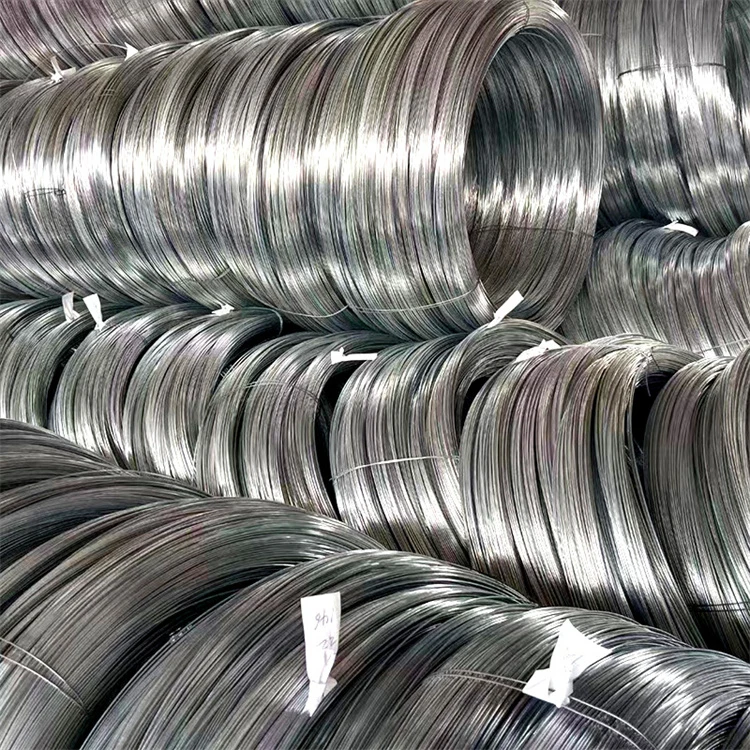
At the end of the day, when your part is sitting at -400°F, you don’t want to be the one second-guessing if your metal will hold. Monel’s been there, done that, and proven it works. Let’s make sure your project doesn’t end up as another story of a material that failed in the cold.
Duplex Stainless Steel References:
- ASM International. (2006). Properties of Monel Alloys for Low-Temperature Applications. Materials Park, OH: ASM International.
- Military Handbook 5. (1998). Metallic Materials and Elements for Aerospace Vehicle Structures. Department of Defense, USA.
- Nickelin Institute. (2019). Low-Temperature Performance of Nickel-Copper Alloys. Brussels: European Nickel Institute.
Jiangsu Xurui Metal Group Co., Ltd.
With abundant experience, we are one of the most professional monel alloy manufacturers and suppliers in China. We are committed to providing high quality metal products for global clients. Please feel free to wholesale bulk high-grade monel alloy in stock here from our factory.
Address: 32-117, South Stainless Steel Market, Xinwu District, Wuxi, Jiangsu, China
E-mail: Mia@xuruimetal.com
WebSite: https://www.xurui-steel.com/
