Hey everyone, thanks for swinging by my corner of the internet—since I’ve spent the last 12 years obsessing over vacuum pump bearings, I get asked this exact question at least three times a week: “What’s the real difference between single-row and double-row vacuum pump bearings?” Yeah, I know, it sounds super technical, but if you’ve ever had a vacuum pump go kaput mid-job (especially if it’s a big-ticket project), you know the right bearing choice isn’t just nerd stuff—it’s what keeps your line running, your samples from spoiling, and your late nights troubleshooting to a minimum. Vacuum Pump Bearings
Let me start with how I even got into this. Back in 2011, I was a new rep for a small industrial parts shop, and a local semiconductor lab called me panicked—their rough vacuum pumps had failed three times in a month, costing them $12k in lost production and cleanroom downtime. I dug in, and turns out they’d been using single-row bearings in pumps that ran 24/7 with heavy radial loads. That disaster got me hooked on actually understanding these bearings, not just selling them. Now I supply bearings direct to vacuum pump OEMs, maintenance crews, and small lab owners, so this is stuff I live and breathe.
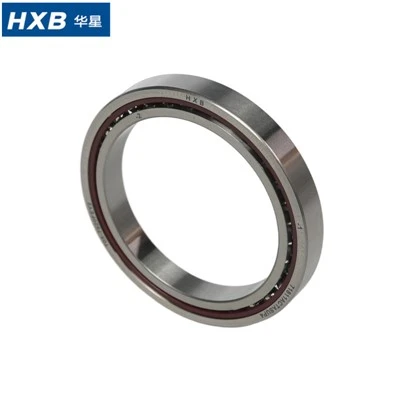
First, let’s break down the basics so we’re all on the same page. Single-row bearings have one set of rolling elements—usually balls, for vacuum pumps—set between an inner ring and an outer ring. Double-row? Two separate sets of those rolling elements, stacked side by side, between the same two rings. It sounds simple, but that tiny extra row changes literally everything about how they perform in a vacuum pump, which is a super specific application. Vacuum pumps operate in harsh conditions: high speeds (some spin at 10,000+ RPM), constant pressure swings (from atmospheric down to high vacuum, like 10^-7 Torr), and often carry mixed radial and axial loads, plus exposure to oil, moisture, or even trace process gases. So these bearings can’t just roll—they’ve got to stay aligned, last years, and keep contamination out of the vacuum chamber.
Let’s start with load handling because that’s the biggest one people mix up. Single-row bearings are built for radial loads mostly. Radial load is the force pressing straight down on the bearing, like if your pump has a rotor that’s heavy and pulls downward. A single row can handle that, great for lighter-duty pumps, like small rotary vane pumps used in student labs or benchtop freeze dryers. But here’s the catch: single-row bearings are garbage at axial loads. Axial load is the side-to-side force, like if your pump’s shaft is pulling back and forth from the motor belt or process pressure changes. Push too hard on the axial side, and the single row will tilt, wear fast, or even seize. I see this all the time with small shop guys who repurpose a cheap single-row bearing from a hardware store for their vacuum pump—within 6 months, it’s toast.
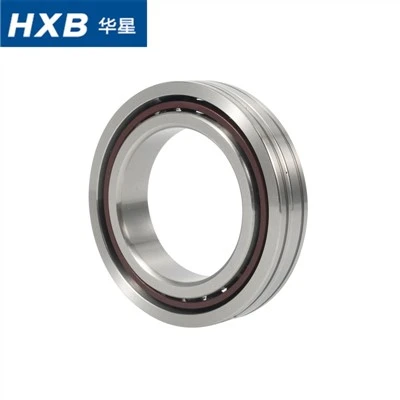
Double-row bearings? They’re built for both radial and axial loads, like a champ. That extra set of balls gives them twice the contact area to spread out force, so they can handle heavy radial loads and significant axial loads at the same time. That’s why they’re the go-to for larger, continuous-duty pumps—like the ones used in food packaging (for vacuum-sealing meat or cheese), semiconductor manufacturing, or large industrial freeze dryers that run 24/7 for months at a time. I had a customer last year who runs a meat processing plant—they were using single-row bearings in their 50HP vacuum pumps, and they’d replace them every 3 months. Switched to double-row, and they’re still going strong 18 months later. The extra row takes the side-to-side force from the pump’s constant start-stop cycles and the load of pulling air through big distribution lines.
Next up is alignment and rigidity. Vacuum pumps hate misalignment. If the inner ring (attached to the pump shaft) is even a tiny bit off from the outer ring (set in the pump housing), you get uneven wear, friction, and that stuff is death for vacuum performance—even a tiny leak from a worn bearing can drop your vacuum level enough to ruin a batch of chemical samples or semiconductor wafers. Single-row bearings are a bit more flexible, right? Their single contact point means they can handle minor misalignment, but only a little. If your pump has any shaft deflection (common in high-speed pumps), a single row will wear unevenly along the ball track, and that turns into heat, which ruins the bearing and can even damage the pump’s shaft.
Double-row bearings are way stiffer. That two-row setup adds more structure to the bearing, so it resists shaft deflection way better. No more uneven wear from a little misalignment, no more heat buildup from rolling elements slamming around. I use double-row bearings specifically for high-speed vacuum pumps (over 8,000 RPM) because that rigidity keeps the shaft stable, which keeps the vacuum consistent. I tested this once for a semiconductor OEM—they had single-row bearings that caused 1 out of every 20 wafers to be rejected because of slight vacuum fluctuations from shaft wobble. Switched to double-row, and that reject rate dropped to less than 1 in 500. That’s millions in saved product for them, all from a bearing choice.
Now, longevity in harsh vacuum environments. Let’s talk about vacuum-specific stuff, not just general bearing life. Bearings in vacuum pumps have to deal with outgassing—when the material inside the bearing releases tiny gas molecules, which can contaminate the high vacuum chamber. Both single and double-row bearings have vacuum-grade options, but double-row ones usually have better sealing. Wait, why? More rolling elements mean there’s more space between the bearing and the housing, so better seals can keep the pump’s process gas and oil out, and keep the bearing’s grease or lubricant from outgassing into the vacuum line. I’ve had a customer doing analytical testing (gas chromatography, mass spec) that could barely get a high enough vacuum because their single-row bearing was outgassing too much. Switched to double-row with a PTFE seal, and they hit their target vacuum level in half the time.
Single-row bearings, even vacuum-grade ones, have a harder time with that sealing because their design only has one set of balls. The seal has to fit tighter to keep contamination out, but tighter seals create more friction, which leads to more heat and shorter life. So single-row works for low-severity, low-contamination setups, but if your pump is running in a dirty environment, double-row is going to last way longer. I’ve seen a double-row bearing in a chemical processing pump run for 5 years with only a single grease top-up, compared to a single-row that needed replacement every 8 months in the same exact operating conditions. Don’t get me wrong—single-row has its place here, just not in harsh dirty vacuums.
Price is the next big one, and I know that’s make-or-break for a lot of small businesses. Single-row bearings are cheaper, plain and simple. Less material, less complex manufacturing, so they cost 20-30% less than a same-size double-row. That’s a big win if you’re a small lab with a low-use pump, or a hobbyist who’s not running 24/7. But here’s the catch— that upfront savings can turn into a loss. If you have to replace a single-row bearing every 3 months, that’s 4 replacements a year, plus labor, downtime, and lost product. Double-row costs more upfront, but it lasts 3-5 times longer, so total cost of ownership is way lower. My meat processing customer I mentioned earlier: single-row bearings cost $80 each, so 4 a year is $320, plus $150 in labor per swap, plus $2,000 in lost production a year. Double-row is $200 each, once every 18 months, so $133 a year, plus $50 in labor, plus $0 in lost production. That’s a $2k+ saving a year, just from the bearing choice.
Wait, let’s also talk about maintenance, because that’s part of cost too. Single-row bearings are simpler to service, right? Smaller, easier to remove and install if you’re doing basic maintenance. But because they wear faster, you’re doing it more often. Double-row bearings take a bit more work to install correctly—you have to make sure the shaft is aligned just right because of their rigidity—but once they’re in, you’re not touching them for years. I always tell customers: if your pump is a “set it and forget it” setup, or you don’t have a lot of maintenance time, pay the extra for double-row. If it’s a small, infrequently used pump and you can swap bearings in 10 minutes, single-row is fine.
Now, let’s clear up some myths I hear all the time. A lot of guys think “more rows = better, always.” No way—if you put a double-row bearing in a tiny benchtop pump that only needs radial load, you’re overcomplicating it. Double-row bearings are bigger, so they won’t fit in smaller pump housings. I had a customer try to put a double-row in a student lab pump, and it didn’t fit—had to cut the housing, which cost more than just using a single-row. The same goes for high-speed vs. low-speed: single-row can handle high speeds if it’s a precision-grade one, but double-row is better for high-speed with loads, which is the sweet spot for most industrial vacuum pumps.
Another myth: all vacuum-grade bearings are the same, regardless of row count. No way—manufacturers design single and double-row vacuum bearings specifically for their load and speed ranges. A single-row deep-groove vacuum bearing is built for radial loads up to a certain RPM, while a double-row angular contact vacuum bearing is built for combined loads and high speeds. That’s why working with a supplier who knows vacuum pumps, not just general bearings, matters. I’ve had customers come to me with a bearing they bought from a big box industrial site that was labeled “vacuum grade” but was actually a standard single-row that couldn’t handle the axial load on their pump. It failed in a week, and they lost a batch of pharmaceutical samples because of it.
So when do you pick which one? Let’s make a quick cheat sheet, based on what I’ve seen work for thousands of customers:
- Go single-row if: You have a small, low-use benchtop pump (student lab, home shop), only radial loads, limited space, and budget is super tight.
- Go double-row if: You have an industrial or large lab pump, run 8+ hours a day, have mixed radial/axial loads, need rigidity for high speeds, operate in harsh/contaminated conditions, or want lower total cost of ownership long-term.
At the end of the day, this isn’t about which bearing is “better”—it’s about which one is right for your vacuum pump. I’ve seen small operations survive on single-row bearings and big plants save millions on double-row, so it all comes down to your specific setup.
Now, if you’re reading this and dealing with a vacuum pump that’s failing too often, or you’re not sure which bearing you need, I can help. I supply vacuum pump bearings direct, no middleman markup, and I’ve worked with every type of pump—from tiny benchtop ones to 100HP industrial units. Just reach out, tell me what pump you have, what it’s used for, and I’ll hook you up with the right bearing, no fluff, no overcharging.
Household Appliances Bearings References:
- Vacuum Pump Bearings: Selection and Application, SKF Group, 2022
- Load Capacity and Rigidity of Single-Row vs. Double-Row Ball Bearings, Technical Association of the Vacuum Industry, 2021
- Outgassing Properties of Vacuum-Grade Bearings, IEEE Transactions on Industrial Electronics, 2020
Hangzhou Huaxing Kechuang Holding Group Co., Ltd.
Hangzhou Huaxing Kechuang Holding Group Co., Ltd. is one of the leading manufacturers and suppliers of vacuum pump bearings in China, featured by quality products and good service. Please rest assured to buy bulk durable vacuum pump bearings from our factory. Welcome to view our website for more information.
Address: No.553 Yingbin Road, Linping, Hangzhou, 311100, China
E-mail: wmb@huaxingbearing.com
WebSite: https://www.hxbbearing.com/
