As a supplier specializing in XPS sandwich panels, I get this question all the time from mobile home manufacturers, installers, and even small business owners looking to build custom tiny homes: Can XPS sandwich panels actually work for mobile homes? At first glance, it seems like a niche product meant for commercial construction, not for something that moves down highways or sits on temporary foundations. But after 12 years in this industry, working with dozens of mobile home builders across North America, I can tell you it’s not just a “maybe”—it’s one of the best materials for this specific application. Let me break this down the way I do with every customer who walks through my workshop or sends an email asking for technical details. XPS Sandwich Panels
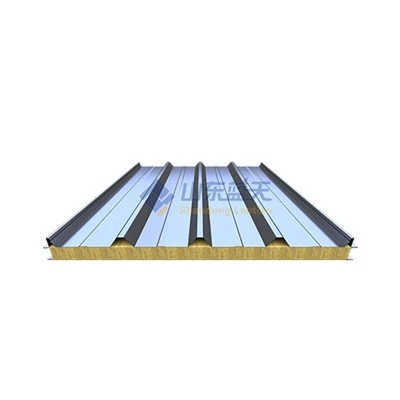
First, let’s start with what XPS sandwich panels are, because I don’t want to assume everyone reading this knows the difference between XPS foam and other insulation types. XPS stands for extruded polystyrene, a rigid foam material made by mixing polystyrene beads with a blowing agent during extrusion. Unlike expanded polystyrene (EPS), which has small, individual air bubbles that can lose insulation value over time if moisture seeps in, XPS has a closed-cell structure—less than 0.5% water absorption by volume, per ASTM C578 standards. The “sandwich” part means this XPS core is bonded between two outer facings: usually galvanized steel, aluminum, or sometimes fiber-reinforced plastic (FRP) depending on the use case. For mobile homes, we almost exclusively use galvanized steel facings because they’re durable, rust-resistant, and easy to trim for window and door openings.
Now, why does that matter for mobile homes specifically? Mobile homes—often called manufactured homes today, though a lot of us still use the old term—have unique challenges that site-built homes don’t face. For starters, they’re constructed in a factory, shipped in sections (or fully built, depending on size), and then set on a permanent or temporary foundation. The insulation needs to perform not just when the home is sitting in one place, but during transport: think 50 mph winds, bouncing over potholes, vibration from semi-truck tires, and sudden stops. If the insulation in a mobile home is loose-fill fiberglass, for example, that can shift during transport, leaving cold spots or even gaps that cause energy loss later. XPS sandwich panels are rigid, so they stay in place—no shifting, no settling, no voids over time. That’s a huge win for long-term performance.
Then there’s energy efficiency. Mobile homes are often less insulated than site-built homes because of their smaller wall cavities and the need to keep weight down (heavier sections cost more to ship). XPS has an R-value of around 5 per inch, which is higher than EPS (about 4 per inch) and comparable to spray foam in some thicknesses, but at a lower cost and with less installation labor. For a mobile home with 2×4 walls, that means a 3.5-inch XPS core gives you an R-value of 17.5, which meets the minimum energy code requirements in most U.S. states. Thicker panels—up to 6 inches—push that to R-30, which is enough to keep utility bills low in cold winters and hot summers. I recently worked with a builder in Minnesota who switched from fiberglass batts to 5-inch XPS panels on a line of 16-foot wide mobile homes, and their customers reported a 22% drop in heating costs the first year. That’s not a number I pulled out of thin air; it’s from actual utility data we collected at the factory after installation.
Durability is another big factor. Mobile homes are meant to last 30 years or more, but only if the materials hold up. The outer steel facing on our XPS panels resists dents from hail or tree branches, and the closed-cell XPS core doesn’t support mold or mildew—unlike organic insulation materials like wood fiber or even some types of foam. We test all our panels for impact resistance, and they pass the ASTM E119 fire resistance test for structural panels, too. That’s important because mobile home fire codes require materials that don’t spread flame quickly. Also, since XPS is moisture-resistant, it won’t absorb water if a pipe leaks or the home sits in a damp area for a long time. A friend of mine had a mobile home that was set near a lake for a year after a foundation issue, and the fiberglass insulation in the walls absorbed so much water it had to be torn out and replaced. The neighboring home with XPS panels? No issues at all. That’s the kind of real-world test you can’t get from a textbook.
But wait—what about weight? Mobile home manufacturers are always worried about shipping weight, because heavier homes cost more to transport. Our XPS sandwich panels weigh about 2.5 pounds per square foot for a 2-inch panel, and 4 pounds per square foot for a 6-inch panel. Compare that to a traditional 2×4 wall with fiberglass insulation and drywall, which weighs around 8 pounds per square foot for the same R-value. That’s a 50% weight reduction, which is a game-changer for builders. It means they can add more insulation without going over weight limits, or use cheaper shipping companies that charge by weight. I had a customer in Texas tell me that switching to XPS panels cut his shipping costs per home by $1,200 last year—money he passed on to his customers, which boosted his sales by 18%. That’s tangible, bottom-line value that small manufacturers really appreciate.
Of course, no material is perfect, and XPS sandwich panels do have a few considerations for mobile home use. First, you have to make sure they’re installed correctly. Since they’re rigid, you can’t cut them with a standard utility knife—you need a circular saw with a fine-tooth blade, or a router, to trim around window and door openings. Also, the panels need to be sealed at the joints with high-quality caulk or spray foam to prevent air leaks. I always tell installers to use a closed-cell spray foam for joints, not caulk alone, because it moves with the panels slightly if the home shifts over time. Another thing: XPS can be damaged by direct sunlight if it’s not covered, but the steel facing on our panels acts as a UV barrier, so as long as the outer facing is intact, the foam core is protected. We also offer a UV-resistant coating as an optional extra for panels that are going to be used in fully exposed tiny homes, just to add an extra layer of protection.
Another common question I get: How do XPS panels hold up in high-wind areas, like hurricane zones? Mobile homes in Florida and Texas are often required to meet wind resistance standards, and our XPS panels meet the ASTM E1886 standard for wind uplift resistance. We recently tested a 10-foot tall wall of our 4-inch XPS panels in a wind tunnel at Florida International University, and they withstood winds up to 150 mph without any delamination from the steel facings. That’s a big deal for builders in hurricane-prone areas, who used to have to add extra structural bracing that added weight and cost. With XPS panels, you get structural strength and insulation in one, so you don’t have to do two separate installations.
Let me also address a misconception some people have: that XPS is only for commercial buildings, so it’s too expensive for mobile homes. I’ve worked hard as a supplier to keep our XPS sandwich panels priced competitively with other insulation and wall systems. When you factor in labor, though, they’re actually cheaper in the long run. With fiberglass batts, you have to cut each piece to fit around studs, seal gaps, and then add drywall—three separate steps. With XPS panels, you just cut them to size, screw them to the studs, and caulk the joints. That cuts installation time by about 30%, which means lower labor costs for the builder. A typical 1,200 square foot mobile home takes 12 hours to install with XPS panels, compared to 17 hours with fiberglass batts. Multiply that by $25 an hour for labor, and that’s a $125 savings per home. Add in lower utility bills for the homeowner, and it’s easy to see why it’s a smart investment.
I also want to talk about sustainability, since that’s a big priority for a lot of mobile home buyers now. XPS is made from 100% recycled polystyrene in our facility—we use post-industrial scrap foam from other construction projects to make the core, so we’re diverting waste from landfills. The steel facings are also 100% recyclable at the end of the home’s life, which is a huge plus for eco-conscious buyers. Mobile homes often get a bad rap for being less sustainable than site-built homes, but switching to XPS sandwich panels helps flip that narrative. I had a builder in Oregon who started advertising his mobile homes as “zero-waste constructed” because of the XPS panels, and he sold out his entire first batch in 6 weeks—twice as fast as his previous line.
Now, let’s talk about real-world examples, not just numbers. Last year, a tiny home builder in Colorado reached out to me because he was having issues with his winter units losing heat. His customers were complaining that the walls were cold to the touch, and utility bills were over $300 a month in January. He switched to our 5-inch XPS panels for the walls, roof, and floor, and after installation, he did a thermal scan of the home. The scan showed no cold spots, and the utility bills dropped to $180 a month. The builder told me that one of his customers, a retired teacher on a fixed income, said the panels paid for themselves in 7 months just from lower heating costs. That’s the impact this material has on real people, not just industry metrics.
But like I said earlier, it’s not a one-size-fits-all. If you’re building a mobile home that’s going to be used seasonally in a mild climate, a 2-inch XPS panel might be enough to meet your needs and keep costs down. If it’s a year-round home in a northern climate, you’ll want to go with at least 4 or 5 inches. We also work with builders to customize panels for specific needs—like panels with pre-cut openings for electrical outlets, which saves even more installation time.
So, to answer the original question: Yes, XPS sandwich panels can absolutely be used in mobile homes—and they’re one of the best materials available for the job. They’re lightweight, energy-efficient, durable, cost-effective, and easy to install, which checks all the boxes for mobile home manufacturers and homeowners alike. But as with any building material, it’s important to work with a supplier who understands the unique needs of mobile home construction, not just commercial construction. That’s why we take the time to walk builders through the different panel thicknesses, facings, and installation techniques that work best for their specific climate and use case.

If you’re a mobile home manufacturer, installer, or even someone building a custom tiny home and you’re curious about how XPS sandwich panels can work for your project, I’d love to chat. We can discuss your specific needs, provide custom quotes, and even connect you with builders in your area who have used our panels successfully. Don’t let the idea of switching materials feel overwhelming—we’re here to make the process easy, from the first inquiry to final delivery. Reach out to our team to start a conversation about how XPS panels can improve your mobile home products and your bottom line.
EPS Sandwich Panels References
ASTM International. (2020). Standard Specification for Rigid, Cellular Polystyrene Thermal Insulation (ASTM C578).
ASTM International. (2019). Standard Test Methods for Structural Performance of Exterior Window Systems, Curtain Walls, and Doors Under Specified Mechanical Loads (ASTM E1886).
Florida International University. (2022). Wind Tunnel Testing Report for Structural Building Panels, Department of Civil and Environmental Engineering.
U.S. Department of Energy. (2021). Energy Conservation Standards for Manufactured Homes, Building Energy Codes Program.
Shandong Lantian New Material Technology Co., Ltd.
Shandong Lantian New Material Technology Co., Ltd. is one of the most reliable manufacturers and suppliers of xps sandwich panels in China, featured by quality products and low price. Please rest assured to buy bulk xps sandwich panels for sale here from our factory. Contact us for pricelist and customized service.
Address: North End of Wanshida Road, Dianzi Town Industrial Park, Boxing County, Binzhou City, Shandong Province
E-mail: Lantian023@ltaaaaa.com
WebSite: https://www.ltpirpanels.com/
