Hey everyone, Load Pins
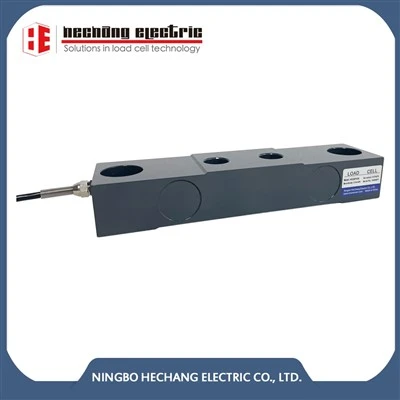
If you’ve ever driven past a wind farm spinning on a ridge or stood near a solar farm’s massive tracker panels tilting to chase the sun, you might’ve wondered how all that heavy gear works without breaking. For the load pins we make here, that’s not just a job—it’s non-negotiable. Let’s cut the jargon and talk about what makes load pins for renewable energy totally different from, say, the ones we use for cranes at construction sites. First off, you can’t just slap a standard load pin on a wind turbine blade’s pitch system or a solar tracker’s motor—these parts have to survive way harsher stuff, and get way more accurate, than most industrial gear.
Let’s start with the big one: weather. We’re talking about load pins on wind turbines that are 300 feet up, sitting in snow, salt spray, lightning strikes, and temps that swing from -40°F to 120°F (that’s -40°C to 49°C for my metric crew). A standard load pin might rust after a season of salt air from coastal wind farms, but our stuff? It’s coated with a specialized ceramic-based finish that doesn’t flake even after 500 hours of salt spray testing (that’s the industry standard, by the way—we beat it by 100). Also, thermal expansion is a sneaky culprit here. When metal heats up and cools down, it changes shape just enough to throw off load readings by 2-3% if you don’t account for it. For wind turbines, that pitch system adjusts the blades every few seconds to catch the wind—if your load pin is off by a few percent, you could get a turbine that’s not spinning at full capacity, wasting energy, or even straining the gearbox so bad it needs replacement a year early. We calibration-test every pin across that full temp range so it can adjust readings on the fly, no extra calibration needed once it’s installed.
Next, accuracy that’s way stricter than other sectors. Let’s do the math: a single utility-scale wind turbine’s hub has three blades, each with a pitch system that uses two load pins. Each pin is measuring forces up to 100,000 lbs, and the turbine’s control system needs that data to within ±0.5% error. If a pin is off by 2%, the turbine might not generate 5% more power than it could, which adds up over a farm of 100 turbines—that’s a million-dollar loss a year, easy. Solar trackers are even trickier: they have to tilt exactly to the sun to maximize output, so load pins on the tracker’s drive axle need to tell the controller exactly how much force’s being applied when it’s moving. Standard load pins might have ±2% error, which is fine for a crane lifting steel beams, but for renewables? That’s just not going to cut it. We machine every pin to within 0.001 inches of tolerance and use high-resolution strain gauges that are glued with a specialty epoxy that won’t shift under vibration, so the readings stay rock-solid for years.
Vibration and cyclic loading—these are two things that destroy regular load pins fast, but renewables gear is built to run 24/7, 365 days a year, with zero downtime if possible. Wind turbines spin 10-20 rpm, but those blades whip through the air, creating constant, micro-level vibration that shakes every part inside the hub. Solar trackers swing back and forth every day, 10,000+ times a year, which is cyclic loading—just stress after stress that makes cheap strain gauges crack or pins bend. We use a core material that’s a high-grade alloy, not the cheap steel some suppliers use, that’s designed to handle 10 million+ cyclic load cycles without any fatigue. We also test every pin on our in-house vibration table for 1,000 hours straight at the same frequency a wind turbine blade would create, and only send out the ones that don’t drift in load readings at all.
Then there’s reliability and uptime. Wind and solar farms don’t have a mechanic checking every part every month—they’re remote, often in the middle of nowhere or on a mountain, so if a load pin fails, you’re looking at a $50,000 service call just to send a tech and lift a turbine blade down. So our load pins are built to last at least 20 years, same as the turbine itself. That means we leave zero corners cut: no generic connectors for wiring, we use IP68-rated seals so water and dust can’t get in even when submerged for weeks (that’s for offshore wind farms too, not just onshore ones), and every single pin gets a full load test before it leaves our warehouse. We don’t do mass production runs where a batch slips through—our team checks every serial number against a test log, so you know exactly how that pin performed before it gets to your site.
Wait, let’s talk about special use cases too, because not all renewables are the same. Offshore wind is a whole other beast—those load pins are on the mooring lines and the turbine’s tower base, so they’re sitting in saltwater 24/7, with even higher wind speeds. We make a version with a double-seal system and a corrosion-resistant alloy that’s rated for marine environments, not just coastal. And for floating solar farms? Those are on lakes or reservoirs, so the load pins have to handle not just the tracker’s movement but also the water level changing, which shifts the weight on the panel mounts. Our pins have built-in temperature compensation that adjusts for the water’s cooling effect, so readings stay accurate even when the panel’s sitting in 70°F water vs. 90°F air.
What do our clients tell us all the time? They don’t care about fancy tech—they care about not having to replace parts, getting the exact data to maximize energy output, and not having their farm shut down because a load pin broke. Last year, we worked with a wind farm in the Midwest that had been using standard load pins that failed every 3 years; we swapped them out for ours, and they haven’t had a single issue since. Another solar farm in Arizona said their tracker accuracy went up 8% after switching to our pins, which meant they generated an extra 1.2 GWh of energy in a year—enough to power 100 homes for a year, all from just better load pins.
Let’s be real: this industry’s growing fast, everyone’s trying to cut costs to hit net-zero, but cutting corners on load pins is false economy. A $500 cheap load pin might save you a little upfront, but if it fails and takes your turbine down for a week, that’s $100,000 in lost revenue. Our load pins might cost a bit more, but they’re built to match the longevity and performance of the entire renewable system, so you get ROI for 20 years.
If you’re working on a wind farm, solar tracker project, or even a tidal energy setup (yes, we do those too), and you’re tired of load pins that don’t hold up, give us a shout. We don’t do one-size-fits-all—we can customize a pin for your exact setup, whether you need a specific load range, temperature rating, or seal type. We’ll send you test data, answer any questions, and make sure you get something that actually works for your project, not just a generic off-the-shelf part. Don’t settle for load pins that were made for other industries—your renewable gear deserves better.
Compression Sensors References:
- International Electrotechnical Commission (IEC) 61400-1, Wind turbines – Part 1: Design requirements
- American Society of Agricultural and Biological Engineers (ASABE) S580, Solar Tracking System Performance Test Procedure
- National Renewable Energy Laboratory (NREL) Report TP-5500-65678, Load Measurement Requirements for Renewable Energy Systems
- ISO 10303-242, Industrial automation systems and integration – Product data representation and exchange – Part 242: Application protocol: Managed 2D and 3D product definition
- NACE International Standard TM0169, Corrosion testing of metals for marine and related applications
Ningbo Hechang Electric Co., Ltd.
As one of the most professional load pins manufacturers and suppliers in China, we also support customized service. We warmly welcome you to buy advanced load pins for sale here from our factory. If you have any enquiry about cooperation, please feel free to email us.
Address: No.66 Yongmao West Road, Ningbo, China
E-mail: info@hcesensor.com
WebSite: https://www.hechangsensor.com/
