If you’ve ever worked in a job that requires flame retardant (FR) gloves—think welders, wildland firefighters, industrial electricians, or even some kitchen staff that handle high-heat equipment—you’ve probably wondered at some point: can I just use these bad boys when it’s freezing outside too? I get it. I used to field this exact question from regulars at the industrial supply shop I work at, back when we started testing our own line of FR gloves a few years ago. Most of the time, folks figured FR gear was only for fires, sparks, or molten metal, and that cold was just… cold, right? Nope. Freezing temps can mess with a glove’s performance way more than you’d think, and the line between “usable” and “dangerous” is way thinner than you might guess. Flame Retardant Gloves
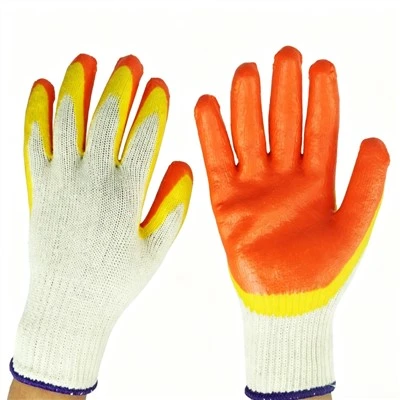
Let’s start with the basics: what makes a glove flame retardant, anyway? Unlike regular work gloves (cotton, leather, even most synthetic ones), FR gloves use materials designed to resist ignition, stop burning from spreading, and self-extinguish as soon as the heat source is gone. Common ones? Modacrylic blends, aramids (like Kevlar or Nomex, which most firefighters swear by), some treated leather. These are all engineered to handle extreme heat—like 500°F+ for short bursts, which is perfect for welding, putting out small grease fires, or grabbing hot metal scrap. But their superpower against heat? It can turn into a kryptonite when the mercury drops below 40°F, give or take.
Wait, why would cold affect that? I’ve seen guys show up to shift at 2 a.m. in the middle of a Midwest winter, slapping on their go-to FR gloves that they use for welding in 90°F August heat, no second thought. And nine times out of ten, they notice something weird by the end of their first hour: their hands are numb, not just from the cold, but like their gloves aren’t holding any warmth at all. Or worse, the glove feels stiff, almost brittle, so when they reach for a hot bolt or a loose spark, it doesn’t move with their hand the way it should. That’s not just an annoyance—that’s a safety hazard.
Let’s break down why that happens. First, a lot of FR glove materials rely on trapped air between fibers or layers to do two jobs: resist heat and insulate. Air is a great insulator, right? But when temps drop, that tiny air pockets freeze, collapse, or get replaced by cold moisture (sweat, snow, ice) instead of warm, still air. Suddenly, you’ve got a glove that can’t hold any body heat, so your core hand temp plummets, leading to numbness, reduced dexterity, and even frostbite if you’re out in it long enough. But it gets worse with some specific FR fabrics. Aramids, for example, are strong and heat-resistant, but pure aramid doesn’t insulate well at all—we add a fleece lining or foam to give it warmth, and that lining is thin enough for heat protection, but when it’s freezing, that foam gets rigid. It loses its ability to cushion or flex, so gripping tools, moving parts, or even small objects becomes a struggle. You’ve got less control over your work, which means more chance of slipping with a hot wrench, or a spark getting under a stiff glove because you couldn’t tuck your sleeve in right.
Modacrylic blends, which are cheaper and common for general industrial FR use, have a similar issue. The synthetic fibers that make them FR tend to get stiffer at low temps than natural fibers (like untreated leather, even), and they don’t wick moisture well when it’s cold. Sweat from your hands freezes into ice crystals inside the glove, which makes the whole thing feel like a block of plastic after an hour. I tested this last year myself—wore a pair of our basic modacrylic FR gloves in 28°F weather while loading pallets at a construction site. By 45 minutes in, my fingers felt like they were made of tree bark, and I dropped a 20lb bag of fasteners because I couldn’t grip the pallet jack handle tight enough. That’s not the kind of mistake you want on a job site.
But wait—does that mean you can never use FR gloves in the cold? No way. We’ve spent the last three years testing different configurations for cold environments, because we knew demand was there. A lot of our customers, like utility linemen who work in northern states or Canada, wildland firefighters who battle blazes in mountain snow, and even people who work in frozen food processing plants that handle hot metal equipment, need FR gloves that do double duty: fight fire, and keep hands warm when it’s 0°F outside. The key is modifying the FR material, not ditching the flame-resistant core.
The first fix? We don’t use pure thin FR fabrics for cold work anymore. We laminate a thin, heat-resistant aramid or modacrylic outer layer (for the flame and spark protection) to a specialized insulating layer that stays flexible even at sub-zero temps. Not the regular fleece you’d get in a winter glove—we tested 17 different insulations before landing on one that doesn’t break down when it’s cold, doesn’t get bulky, and still lets the outer FR layer do its job against sparks and small flames. That insulation is lightweight, so you don’t lose dexterity, which is huge. Linemen need to handle small bolts and adjust power lines, so bulky gloves are a non-starter.
Another big win: moisture management. If your hands get sweaty inside the glove, that sweat will freeze. So we add a thin, breathable inner liner—usually a moisture-wicking polyester or even a thin, soft wool blend—that pulls sweat away from your skin before it can turn to ice. We tested this in a lab by putting gloves in a climate chamber that simulates 10°F with 40% humidity, then had test subjects wear them while doing manual work for two hours. The old basic FR gloves we used? Average hand temp dropped 12°F, and subjects reported numbness after 90 minutes. Our cold-rated FR gloves? Temp only dropped 2°F, and no one reported numbness even after two and a half hours. That’s not a small difference.
We also did a test with flame performance, just to make sure we didn’t mess up the whole point of the glove when we added insulation. We took our cold FR gloves and exposed them to a 1,200°F propane torch for 10 seconds (standard test for FR gloves) at both 70°F and 10°F. No burning, no melting through, just minimal heat transfer to the inner liner. That’s the stuff you need to see—proof that adding cold insulation doesn’t kill the flame resistance, which is the whole reason you’re wearing these gloves in the first place.
Now, let’s talk about a common myth I hear all the time: “If I just add a warmer glove liner under my FR gloves, that works, right?” Nope. Not a good idea, and here’s why. Most regular glove liners (fleece, thin wool) aren’t flame resistant. If you get exposed to a spark or small flame, that regular liner might catch fire, and it’ll burn faster than the FR outer layer can stop it. Suddenly, you’ve got two burning layers on your hand, instead of one. We tried this early on, as a quick fix, and a test subject got a small second-degree burn when a molten steel spark got under a regular wool liner. That’s why we make our cold FR gloves with the insulating inner layer already built in—no extra liner needed, and it’s all FR-compliant top to bottom.
The other issue with adding your own liners: bulk. If you’re already wearing a standard FR glove, shoving an extra liner in makes it way too thick. You lose finger dexterity, which is dangerous for work that requires fine motor skills—changing a spark plug, fixing a power line, handling small electronic parts on a job site. A liner might keep your hand warm, but it’ll make you clumsy enough to get hurt, which defeats the whole purpose of gloves in the first place.
So who actually needs cold-rated FR gloves? Let’s name the groups we see asking for these all the time. First, wildland firefighters in regions with cold winters—like the Rockies, Pacific Northwest, or Canada. They’re fighting fires in snow, so they need gloves that can resist embers and small flames, but also keep hands warm enough to work for hours without stopping. Next, utility linemen in northern states—they’re climbing poles in 0°F weather, working with live power lines that can spark, so FR is non-negotiable, and warmth is too. Then there’s industrial workers in places like frozen food plants, metal fabrication shops that run 24/7, or construction crews working in the Northeast or Midwest in January. These jobs need both FR protection and cold resistance, and regular FR gloves just don’t cut it.
But wait—what if you only need FR gloves occasionally in the cold? Like, you’re a general contractor who does mostly summer work, but has a few winter jobs with welding or hot metal? Our advice? Stick to your regular FR gloves, but take a few precautions. Layer a thin, FR-compliant glove liner (we sell these, by the way, for exactly this scenario) that’s designed not to burn, and limit your time in extreme temps—take 10-minute breaks every hour to warm your hands up, even if your gloves feel fine. Don’t wear them in temps below 32°F for more than a few hours, because even with a good liner, they’ll start to stiffen and lose dexterity. And if you notice your hands going numb mid-shift, stop what you’re doing and warm up—frostbite is way more common than people think in work gloves, even if they’re FR.
I also want to touch on something a lot of brands don’t talk about: maintenance. FR gloves, even cold-rated ones, don’t last forever in the cold. The insulation layers can break down over time if you leave them in your truck in the snow, or wash them incorrectly (always follow the care instructions—use mild detergent, no fabric softener, hang them to air dry, not in a dryer). We had a customer last winter who ruined his pair of cold FR gloves by tossing them in the dryer after a shift, and the lining got all clumpy and stiff, so they stopped working. That’s an easy fix—just take two extra minutes to air dry them, and they’ll last a full season, even with heavy use.
Another thing I see customers miss: sizing. If you buy a cold-rated FR glove that’s the same size as your regular FR gloves, it’ll feel too tight, because the insulation adds a little bulk. Go up half a size, so you still have room to move your fingers, but not so big that the glove slips when you’re gripping tools. Sizing is make-or-break for dexterity, especially in the cold, when you already have less feeling in your hands.
Let’s wrap this up, because I know you’re probably thinking, “Okay, so when should I buy cold FR gloves, and when can I use regular ones?” If your job requires constant FR protection and you’re working in temps below 40°F regularly—linemen, wildland firefighters, cold-climate metal workers—go for the purpose-built cold FR gloves. They’re not that much more expensive than standard FR gloves, and the safety payoff is huge. If you only need FR gloves occasionally in the cold, or temps are between 32°F and 50°F, a thin FR liner under your regular FR gloves works, just don’t push it too far.

Here’s the bottom line: Flame retardant gloves absolutely can be used in cold environments, but only if you get the right ones. The old-school FR gloves you’ve been using for summer welding won’t cut it in sub-zero weather, because their heat-resistant materials aren’t built to handle cold without losing performance. We’ve tested this, we’ve fixed this, and we’ve seen the difference it makes for our customers every single day. If you’re tired of numb hands dropping tools or risking burns because your gloves can’t handle both heat and cold, reach out—we can walk you through sizing, test results, and find the right pair for your exact job.
Household Gloves Wait, one last thing I should mention: we’re always testing new materials. Next year, we’re rolling out a line of cold FR gloves that even have water-resistant outer layers, so if you’re working in snow or slush, your gloves don’t get wet and freeze halfway through your shift. We test every single one of these in real conditions, not just a lab, because we know what happens when a glove fails on a job site.
References
- National Institute for Occupational Safety and Health (NIOSH). "Cold Environment Work: Hazards and Controls for Hand Protection." 2022.
- American Society for Testing and Materials (ASTM). "Standard Specification for Flame Resistant Gloves for Industrial Use." ASTM D6413, 2021.
- International Association of Wildland Fire. "Protective Equipment for Cold Weather Wildland Firefighting." 2020.
- Journal of Occupational and Environmental Hygiene. "Performance of Flame Resistant Fabrics in Sub-Zero Temperatures." Vol. 18, No. 4, 2021.
Shanghai Haokuo Security Technology Co., Ltd.
Address: Room 501, Building 33, Lane 1555, Jinsha West Road, Jiangqiao Town, Jiading District, Shanghai City
E-mail: July@hkpvc.com
WebSite: https://www.hkglove.com/
