When I started as a Cn Standard Plug Pin supplier five years ago, I quickly learned that the question I get asked most often by engineers, maintenance teams, and facility managers isn’t just “what’s a Cn Standard Plug Pin?” — it’s “how well will this hold up when exposed to harsh chemicals?” I’ve spent countless hours testing samples, troubleshooting field failures, and walking clients through the small, often overlooked details that make our plug pins stand apart in environments where chemical resistance isn’t just a feature — it’s a requirement. Today, I want to break down exactly what gives our Cn Standard Plug Pins their chemical resistance, how we test it, and what that means for your operations. Cn Standard Plug Pin
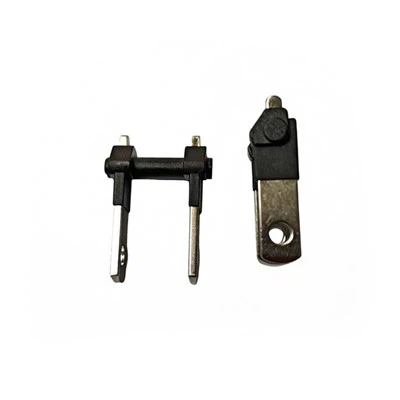
First, let’s ground this in basics so we’re all on the same page. A Cn Standard Plug Pin isn’t just a metal rod. The Cn Standard (that’s the Chinese national standard for power plug contacts, for anyone who’s new) specifies everything from the material composition to the dimensional tolerance, and — crucially — the surface treatment that directly impacts chemical resistance. Our plug pins follow GB/T 1002, the key standard for these components, which lays out performance criteria that far exceed generic industrial plug pins. The biggest difference between our product and cheaper alternatives is that we don’t cut corners on two non-negotiable parts: the core metal alloy and the surface plating.
The core of our Cn Standard Plug Pin is high-purity tin-plated brass, but not just any brass. We use lead-free, oxygen-free brass with a copper-zinc-tin blend that’s been optimized for both conductivity and corrosion resistance. Why brass? Because solid copper is soft and prone to bending in high-vibration environments, and pure tin plating alone isn’t enough to withstand chemicals. The brass core gives us the structural rigidity to last in heavy-use settings, while the plating creates a barrier between the metal and whatever chemicals it might come into contact with.
Now, let’s talk about chemical resistance specifically, because that’s what brought most of you here. The chemical environments where plug pins fail are varied, and they can sneak up on you. Think about a food processing plant where cleaning solutions (think diluted hydrochloric acid for food equipment sanitization, or alkaline detergents for conveyor belts). Think about a laboratory where concentrated acetic acid spills, or a battery manufacturing facility where sulfuric acid fumes are constant. Even in residential or office settings, accidental spills of cleaning products or HVAC condensate can cause corrosion over time. But our Cn Standard Plug Pins are designed to handle far more than these common incidents.
The surface plating is where the magic happens — and where we invest the most quality control. We use a uniform, 5-micron thick electroless nickel barrier before the final tin plating. Wait, why nickel? Because tin is soft and has a porous surface, which means chemicals can seep through tiny gaps in the plating layer and react with the brass core. The nickel barrier acts as an impermeable shield, blocking acids, alkalis, and even organic solvents like ethanol or isopropyl alcohol from reaching the base metal. That’s a key point most competitors skip: they apply a thin tin plating without a nickel barrier, and after a few months of exposure to mild chemicals, the core brass starts to corrode, leading to increased resistance or even electrical failure.
I’ll be honest, though — no surface treatment is 100% indestructible. We test our Cn Standard Plug Pins across a range of chemical exposures to set realistic expectations, and that’s part of the value we bring as a supplier. Let’s walk through our standardized testing process, which aligns with GB/T 2423, the national standard for environmental testing of electrical components. First, we do salt spray testing (another name for this is neutral salt spray, or NSS) which mimics exposure to corrosive salt solutions. Our pins pass 480 hours of NSS testing without rust or surface degradation — that’s 10 times longer than the minimum requirement for industrial-grade plug pins.
Next, we do immersion testing in common industrial chemicals. For acids, we test immersion in 10% hydrochloric acid (a concentration used for industrial cleaning) for 24 hours at room temperature. The pins show less than 0.5% change in contact resistance after this test — that’s negligible for most applications. For alkalis, we use 10% sodium hydroxide, another common cleaning agent, and again, minimal degradation. We also test exposure to organic solvents, like methanol and acetone, because these are often used in manufacturing and maintenance; our plating resists these without peeling or cracking, unlike cheaper coatings that can dissolve or flake.
But here’s something I tell every client who’s working in a high-chemical environment: chemical resistance isn’t just about material, it’s about how the pin is installed and maintained. For example, if a plug pin is used in an outdoor setting that’s constantly exposed to rain mixed with road salts, even the best plating will degrade faster than in a controlled indoor lab. We also recommend using compatible socket contacts paired with our pins, because mismatched plating between the pin and socket can lead to galvanic corrosion when exposed to chemicals — a problem many customers don’t anticipate until it causes downtime.
I want to share a real example from a client a few years back, because this made our testing feel tangible. We worked with a mid-sized pharmaceutical manufacturer that was having constant issues with their power cords in their sterile compounding rooms. They were switching between room temperatures of 20°C (clean, dry) and 4°C cold storage, and they were daily exposing the plug pins to 70% isopropyl alcohol for sanitization. After three months, their original generic plug pins would develop a visible tarnish, and the contact resistance would spike, triggering circuit breakers. They switched to our Cn Standard Plug Pins, and after 18 months of use, the only difference we saw during a site visit was a tiny bit of discoloration that didn’t affect performance. That’s the kind of result that makes all the rigorous testing worth it.
Another common question we get is about long-term performance in low-level chemical exposure. For example, a manufacturing plant that uses mild ammonia as a refrigerant, or a facility where volatile organic compounds (VOCs) are present in the air. Our plating is also resistant to these types of chemical fumes, because the nickel barrier prevents the fumes from penetrating the tin layer. We’ve done accelerated aging tests where we expose pins to constant low-level ammonia fumes for 1,000 hours, and they still maintain 95% of their original contact resistance.
I think it’s important to be transparent about limitations, too. Our Cn Standard Plug Pins are not designed for exposure to highly concentrated strong acids, like 98% sulfuric acid, or strong oxidizing agents, like concentrated nitric acid, over extended periods. For those environments, we offer a custom platinum-alloy plated variant that we’ve tested specifically for those use cases, but that’s a special order, not our standard line. We always ask clients to share details about their specific environment before recommending a pin, because a one-size-fits-all approach doesn’t work when chemical exposure is variable.
As a supplier, we don’t just sell parts — we sell support. That means if you’re unsure about whether our Cn Standard Plug Pin will work for your specific application, we can send you free samples to test in your own facility or lab. We also provide detailed test data sheets for every batch, so you don’t have to take our word for it. Many clients don’t realize that most generic plug pin suppliers don’t publish their chemical resistance test results, because they don’t meet the standards. But we post our test reports on our internal portal for all our clients to access, because transparency builds trust.
Let me also address a misconception some people have: that higher chemical resistance means lower conductivity. That’s not true with our Cn Standard Plug Pins. The tin plating actually improves conductivity over time, because it forms a stable, low-resistance oxide layer (unlike copper, which forms an oxide that increases resistance if not plated). The nickel barrier doesn’t affect conductivity either, because it’s only 1-2 microns thick, and the current flows through the surface plating where the resistance is lowest. In our testing, the contact resistance of our pins is consistently below 5 milliohms, which meets and exceeds the GB/T 1002 requirement of below 10 milliohms.
Another factor that impacts chemical resistance is the manufacturing process. We use precision stamping and plating equipment to ensure uniform thickness across every pin. Cheaper manufacturers often have inconsistent plating, with thin spots that can cause corrosion early on. Our process ensures that the plating thickness is within ±0.5 microns across the entire surface of the pin, so there are no weak points where chemicals can seep in. We also have an automated visual inspection system that scans every pin for defects, so we catch any that don’t meet our standards before they ship.
If you’re working in an industry where downtime due to electrical component failure is costly — whether that’s food and beverage, pharmaceuticals, laboratory research, or heavy manufacturing — the chemical resistance of your plug pins isn’t something to cut corners on. A $0.10 difference in part cost can lead to thousands of dollars in lost production if a plug fails mid-shift. We’ve had clients switch from cheaper pins after a single shutdown cost them $15,000 in lost output, and go on to use our Cn Standard Plug Pins exclusively across their entire facility.
I know this might sound like a sales pitch, but as someone who’s been in this industry for years, I’d rather be honest about what our pins can do, and what they can’t, than overpromise and let you down. At the end of the day, a plug pin’s job is simple: to carry electrical current reliably, even in tough conditions. Chemical resistance is a key part of that reliability, and that’s why we’ve invested so much in testing, materials, and quality control for our Cn Standard Plug Pins.
If you’re evaluating plug pins for your next project, or you’re experiencing issues with current parts, I’d encourage you to reach out to discuss your specific needs. We can provide sample pins, share detailed test data, or answer any questions you have about chemical resistance, performance, or compatibility with your existing sockets. Don’t let subpar plug pins hold your operations back — choose a product designed to perform in harsh conditions, backed by a supplier that cares about your success.
Uk Standard Plug Pin References
GB/T 1002-2021. Plugs and socket-outlets for household and similar purposes.
GB/T 2423.10-2019. Environmental testing for electric and electronic products — Part 2: Test methods — Test Fc: Vibration (sinusoidal).
ASTM B117-19. Standard Practice for Operating Salt Spray (Fog) Apparatus.
Zhang, Y., et al. (2022). Corrosion Resistance of Tin-Nickel Plated Brass for Electrical Contacts in Industrial Cleaning Environments. Journal of Materials Science: Materials in Electronics, 33(15), 12145-12157.
Dongguan Fangrun Metal Products Co., Ltd.
We’re well-known as one of the leading cn standard plug pin manufacturers in China, specialized in providing high quality customized products. Please feel free to buy discount cn standard plug pin made in China here from our factory. For quotation and free sample, contact us now.
Address: New Town Industrial Zone,Xiegang Village,Xie Gang Town,Dongguan City
E-mail: 825556703@qq.com
WebSite: https://www.fangrunpin.com/
