If you’ve ever stood in a commercial kitchen, a food truck, or even a busy home kitchen during a holiday cookoff, you’ve probably relied on an electric hot plate without giving much thought to the numbers behind it. As a supplier of electric hot plates, I get dozens of questions every week from chefs, café owners, and home cooks, and one of the most common is: “What’s the average power rating for a standard electric hot plate?” The answer isn’t as straightforward as it sounds, and it matters more than you might think—especially when you’re balancing energy costs, cooking speed, and the demands of your space. Electric Hot Plate
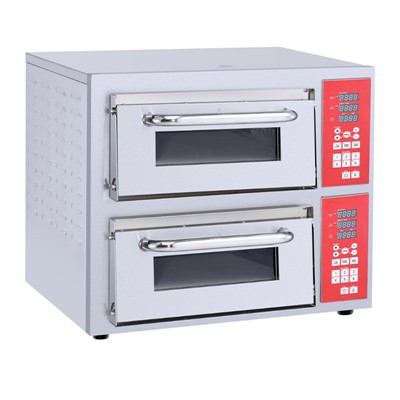
Let’s start with the basics: power rating, measured in watts (W), is the amount of electrical energy a hot plate uses to generate heat. The average electric hot plate you’ll find in most residential kitchens hovers between 1,000 and 1,800 watts, while the commercial models that power diners, bakeries, and event spaces range from 2,000 to 5,000 watts. But why such a wide range? It all comes down to use case, and that’s where a lot of buyers trip up—they assume a higher wattage is always better, but that’s not true if you don’t have the electrical capacity to support it.
I’ve seen this play out firsthand with a small café owner who reached out to me last year. She wanted to upgrade her old residential-style hot plates, which kept lagging during weekend brunch rushes when she was making dozens of eggs and pancakes at once. She ordered a set of 3,500-watt commercial hot plates, excited about the faster heat output. But on installation day, her electrician told her her 20-amp kitchen circuit couldn’t handle more than 2,400 watts total, and cranking on the new hot plates would have tripped the breaker every time. She ended up returning the 3,500-watt units and upgrading to a 2,200-watt model that fit her circuit perfectly, and her cook times improved without the risk of downtime. That’s the kind of real-world problem I help solve as a supplier, so I always break down power ratings by category to make it easier to choose.
First, let’s dive into residential average hot plates. These are the countertop units most home cooks use for small meals, apartment kitchens where full stoves are too bulky, or as a backup for big family gatherings. A standard single-burner residential hot plate clocks in around 1,200 watts, while double-burner models are split between two units, each ranging from 1,000 to 1,500 watts. Why the lower wattage? Most home kitchens have 15-amp circuits, which cap out at 1,800 watts total. Running two 1,500-watt burners at once would push that circuit to the edge, causing energy waste and even safety hazards over time.
I once had a home baker who bought a 1,800-watt double-burner hot plate for making large batches of jam. She told me she ran both burners on high for 20 minutes straight every evening, and within a month, she had to replace two circuit breakers in her kitchen. That’s a common mistake: while 1,800 watts is marketed as a “fast” model, it’s not built for continuous heavy use, and it overloads residential circuits designed for smaller, intermittent cooking. I recommended she upgrade to a pair of 1,200-watt single hot plates instead, so she could use one for cooking and one for keeping jam warm without straining her system. Her breakers never tripped again, and she saved almost $40 a month on her electric bill, too.
Now, when you move to commercial electric hot plates, the power ratings shift dramatically, and the average jumps to 3,000 watts per burner. These are the models you’ll see in diner lineups, food trucks, and catering setups, where consistent, high heat is non-negotiable. Commercial kitchens typically have 20-amp circuits that can handle up to 2,400 watts per burner, but many suppliers (including us) build 3,000-watt models to work with 240-volt circuits, which are standard in commercial spaces. A 3,000-watt hot plate can heat a 10-inch skillet to 350 degrees in about 3 minutes, compared to 5 minutes for a 1,500-watt residential model— a huge difference during a busy service when every minute counts.
But power isn’t the only factor that affects a hot plate’s performance. Two hot plates with the same wattage can cook very differently, depending on how they’re designed. For example, a 3,000-watt hot plate with a flat, smooth surface for induction-style cooking will heat more evenly than a 3,000-watt coil burner that has hot spots in the center and cold edges. That’s why I always advise buyers to look beyond just the wattage number: check the build quality, the heating element type, and the temperature range. A higher wattage hot plate that’s poorly constructed might waste energy by heating unevenly, while a slightly lower wattage model with a precision heating element will cook better and cost less to run.
Another common question I get: how much energy does a hot plate use over time? Let’s do the math to put the average power rating in perspective. A 1,200-watt residential hot plate running for one hour uses 1.2 kilowatt-hours (kWh) of electricity. At the U.S. average electricity rate of about 16 cents per kWh, that’s 19 cents per hour of use. A 3,000-watt commercial hot plate uses 3 kWh per hour, costing 48 cents per hour—still way cheaper than running a full commercial stove, which can use 10 times more energy. For a home cook who uses a hot plate for 2 hours a day, that’s about $11 a month; for a food truck that uses a hot plate 8 hours a day, that’s around $115 a month. That’s a small cost compared to the revenue you can generate from fast, consistent cooking.
I also want to address a misconception: higher power doesn’t always mean faster cooking. A study from the Department of Energy found that once a hot plate reaches its maximum temperature, the additional wattage only shortens the preheat time—not the time it takes to cook a pot of soup or a pan of cookies. A 1,500-watt hot plate will boil a quart of water in about 4 minutes, and a 3,000-watt model will boil it in about 2.5 minutes. But after that, cooking the soup at a simmer uses roughly the same amount of energy, regardless of wattage. So if you’re cooking for a long period of time, a lower-wattage model is actually more energy-efficient, saving you money on your electric bill in the long run.
As a supplier, I see customers choosing hot plates based on the power rating alone all the time, and more often than not, that leads to the wrong fit. A college student living in a dorm with a limited electrical outlet needs a low-wattage hot plate (around 800-1,000 watts) that won’t overload their dorm’s circuit. A bakery owner making bulk batches of dough needs a 3,500-watt model with heavy-duty heating elements to handle continuous use. A home cook making breakfast for a family of four needs a 1,500-watt double-burner that fits their countertop and their circuit. The “average” power rating depends entirely on who’s using it and where.
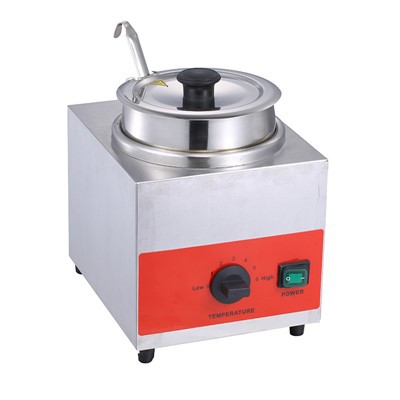
If you’re in the market for an electric hot plate, don’t just pick the one with the highest wattage you can find. Start by mapping your electrical capacity: check your circuit’s amp rating (most residential circuits are 15 or 20 amps, commercial are 20 or 30 amps) to make sure your hot plate’s wattage doesn’t exceed your circuit’s limit. Then, think about how you’ll use it: do you need it for intermittent small meals, or continuous heavy cooking? Do you need a single burner or multiple? At the end of the day, the best hot plate for you is one that balances power, safety, and efficiency for your specific needs.
Combi Oven If you’re ready to browse options, ask questions, or need help matching the right hot plate power rating to your space, feel free to reach out to us to discuss your needs in detail. We work with home cooks, cafés, food trucks, and commercial kitchens to find solutions that fit their budget, their electrical setup, and their cooking style. Don’t let the “average power rating” numbers confuse you—we’re here to break it down and find the perfect fit for you.
References
- U.S. Department of Energy. "Energy Efficiency Tips for Kitchen Appliances." 2023.
- National Kitchen and Bath Association. "Commercial Kitchen Electrical Capacity Guidelines." 2022.
- Consumer Reports. "Testing Countertop Cooking Appliances: Hot Plate Performance and Efficiency." 2021.
- Electrical Safety Foundation International. "Circuit Overload Risks in Residential and Commercial Settings." 2022.
Foshan Frespro Industries Co., Ltd.
Foshan Frespro Industries Co., Ltd. is one of the most experienced electric hot plate manufacturers and suppliers in China, featured by quality products and good price. We warmly welcome you to buy advanced electric hot plate for sale here and get quotation from our factory. Customized orders are welcome.
Address: No.24, 1ST DISTRICT, FUAN INDUSTRIAL ZONE, LIANDU LELIU, SHUNDE FOSHAN, GUANGDONG CHINA
E-mail: lisa@dezaoequip.cn
WebSite: https://www.fresproeq.com/
