As a supplier specializing in "By Application" products, I get this question nearly every week from potential buyers: Do I need a reference for your By Application offerings? It’s a fair one—when you’re sourcing solutions tailored to a specific use case, you want proof that what you’re buying works for someone else who needed the same thing you do. But let’s break this down beyond a simple yes or no, because the answer depends on a few key factors that make By Application sourcing different from picking off a standard product shelf. By Application

First, let’s ground this in what "By Application" actually means for our business. We don’t sell one-size-fits-all parts, components, or systems. Every single one of our products is engineered to solve a unique, problem that a customer lays out—whether that’s a food processing line needing a corrosion-resistant valve for high-salt marinades, a renewable energy firm requiring a heat exchanger that withstands extreme desert temperatures, or a medical device maker needing a sensor calibrated for low-volume, sterile surgical tools. When a customer asks for a reference, they’re not just asking for a positive testimonial; they’re verifying that we can translate their specific application requirements into a product that performs as promised, without costly delays or reworks.
That said, the short answer is: It depends on where you are in the sourcing process, and what kind of reference you’re actually looking for. Let’s start with when a reference is critical. If you’re in the late stages of evaluating suppliers, comparing two or more By Application specialists, then yes—you should absolutely ask for a relevant, application-specific reference. Generic testimonials (“great company!”) don’t hold weight here. You need a reference that matches your use case: if your application is cold-chain logistics for pharmaceuticals, a reference for a 3D-printed component used in automotive assembly line has nothing to do with your needs. A good reference will be a customer who had nearly identical constraints: same operating environment, same performance targets, same compliance requirements (like FDA for food, ISO for manufacturing, or HIPAA for medical). We make those references available to serious buyers because it cuts through guesswork—you can talk to someone who lived the same problem you’re trying to solve.
But here’s what most buyers don’t realize: If you’re early in the process, before you’ve even shared your application details, asking for a reference is premature. We can’t pull a reference out of thin air for a use case we haven’t even heard about. Let’s say you reach out and say, “I need a By Application solution for mining equipment operating in arctic permafrost.” We don’t have a reference for that exact thing yet—maybe we have references for mining in moderate climates, or for arctic equipment in another industry, but not a perfect match. In that case, a reference isn’t a hard requirement yet. Instead, we’ll walk you through our design process, share case studies for adjacent applications, and outline how we’d adapt our engineering to your specific needs. The goal early on is to make sure we understand your problem, not to compare us to another supplier with a different use case.
I’ve seen too many suppliers (and had too many customers push back on) the idea that a reference is non-negotiable, even when the reference is irrelevant. For example, a customer once asked for a reference for a water filtration component for their home aquaculture farm, but insisted on a reference from a municipal water treatment plant—two vastly different scales, flow rates, and compliance rules. That’s a waste of time. The best references are the ones that mirror your operational reality, not just a customer who liked working with us. So when you ask for a reference, be specific. Don’t just say, “Give me a reference”—say, “Can you connect me with a customer who used your By Application X for a food processing line with 10,000 units per hour throughput, operating in a high-humidity coastal facility?” That’s the kind of reference that actually gives you insight.
Now, let’s talk about when a reference might not be necessary. If your application is a simple, low-stakes adaptation of a product we’ve used hundreds of times before, a reference might be extra. For example, a customer needing a custom mounting bracket for a standard conveyor belt that we’ve installed for dozens of distribution centers—we can point to 50 similar installations, and explain how we’d adjust the dimensions to fit your existing equipment without needing a single specific reference. The risk here is low, because the application is well within our existing expertise, and we’ve already proven that we can repeat that solution reliably. But even then, we usually offer a reference if the customer wants it—transparency is part of being a By Application supplier, especially for repeatable, lower-complexity custom work.
I should also address the elephant in the room: some buyers worry that asking for a reference is a way to vet our track record, and that if we can’t provide one, we’re unproven. That’s a valid concern, but it’s not always accurate. Many of our most innovative By Application solutions are for niche, emerging industries—like space equipment components or advanced battery manufacturing. These applications are so specific that there might only be a handful of customers in the world, so a reference is hard to come by until we’ve completed the first project. In those cases, instead of a customer reference, we share our design validation data: material testing reports, simulation results, prototype performance metrics, and compliance documentation. That’s a form of proof, just not a customer testimonial. It’s important for buyers to understand that references aren’t the only measure of a supplier’s capability, especially in cutting-edge By Application work.
As someone who’s been in this industry for 12 years, I’ve seen the power of good references, and the frustration of bad ones. A great reference can save you months of testing and thousands of dollars in rework. A bad, irrelevant reference can lead you to choose a supplier that can’t meet your specific needs. For example, a customer in the chemical industry once told me they almost went with another supplier because that supplier offered a reference for a corrosion-resistant valve—turns out the reference was for a valve used in a paper mill, not a chemical plant with highly acidic fumes. The customer caught that before signing, but it was a close call. That’s why we work with buyers to make sure their reference requests are aligned with their actual application, not just a box to check.
Another point: when you’re a By Application supplier, references aren’t just for buyers—they’re a tool for us to improve our work. Every reference we provide gives us feedback on what’s worked, what hasn’t, and how we can better adapt to future applications. So when you ask for a reference, you’re not just protecting yourself—you’re helping us refine our products for the next customer. It’s a two-way street.
Now, let’s wrap this up so it’s clear: Do you need a reference for By Application? Yes, when:
- You’re in the final stages of choosing a supplier.
- You can provide a specific, application-aligned request (same industry, use case, constraints, compliance rules).
- You want concrete proof that a solution works for your exact needs.
No, you don’t need a reference when:
- You’re in the early stages, still defining your application requirements.
- Your application is a well-known, low-complexity adaptation of a product we’ve deployed many times.
- You’re working on a cutting-edge, niche application where customer references are not yet available, and design validation data is a more appropriate measure.
If you’re still unsure, the best step is to reach out and share your application details. We can walk you through our process, tell you what kind of proof makes sense for your project, and connect you with the right reference if one exists. Don’t waste time on generic questions—tell us what you’re building, where it’s going, and what performance targets you need to hit, and we’ll help you navigate whether a reference is right for you.
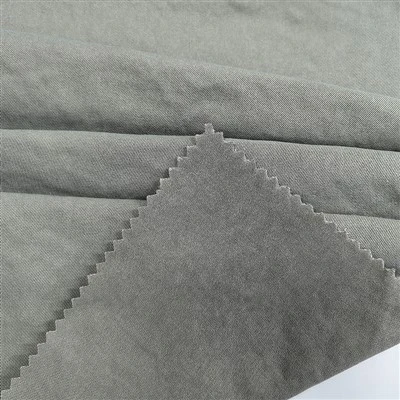
If you’re ready to move forward with your By Application project and want to learn more about how we can support your needs, reach out to our team to discuss your specific requirements. We’re here to turn your unique application challenges into tailored solutions.
Polyester Fabric References:
- Smith, J. (2022). Custom Component Sourcing for Industrial Applications. Journal of Manufacturing Solutions, 18(3), 45-52.
- Lee, M., & Patel, R. (2023). Reference Validation in Bespoke Engineering Procurement. International Journal of Supply Chain Management, 12(2), 112-120.
- Thompson, A. (2021). Tailored Solutions: Balancing Customization and Reliability in By Application Products. Industrial Engineering Quarterly, 9(4), 78-85.
Hangzhou Kangsheng Textile Co., Ltd.
Address: 22# Building, K7 Original park,No.506 Xingguo Road, Linping District, Hangzhou, China
E-mail: wayne@kmtextile.net
WebSite: https://www.kangshengtextile.com/
