Hey everyone, it’s Jake here, and I run the small tiller extension supply company I started out of my garage after I spent way too many summers on my buddy’s powerboat yelling over the wind and waves, trying to hold the tiller while also bailing water or grabbing a lost beer that slid off the dash. Today I’m answering the question I get more than any other over DMs, at marinas, and even when I’m grabbing tacos at the dock bar: Can I use a tiller extension on a powerboat? Short answer? Hell yeah, you can—but there’s a ton of stuff no one tells you before you grab the first random extension off Amazon. Let’s break this down like we’re sitting on a cooler at the boat ramp, no fancy jargon, just real talk from someone who’s sold hundreds of these things and heard every mistake in the book. Tiller Extension
First, let’s get one thing straight: tiller extensions aren’t just for sailboats. I know, I know—when someone thinks “tiller extension,” they picture a sailor perched on the transom of a little Laser or Sunfish, holding that long stick while the boat zips around. But powerboats? Tiller control is super common on mid-sized boats, like center consoles under 25 feet, small runabouts, even some freshwater fishing boats that don’t have a wheel. If your powerboat has a tiller (that long stick sticking out of the outboard or inboard motor you grip to steer), an extension turns that into something that works for you, not against you.
Let’s start with the most obvious use case, because this is why I started selling these in the first place: not wanting to stand right on top of your outboard motor. If you’ve ever been on a hot summer day, standing next to a gas-powered outboard that’s been running for an hour? It’s like leaning into a portable space heater that smells like gasoline. Plus, in rough water, standing right over the motor means you’re way more likely to get whacked by a rogue wave or trip over the motor’s mounting bolts. An extension lets you stand back on the transom, where the air’s cooler, you have more room to move, and you don’t have to deal with that weird engine fume smell clinging to your shirt for the rest of the day. I’ve had guys tell me they started using an extension and suddenly their long days on the water weren’t leaving their shoulders sore from leaning over the motor—game changer, right?
Next up: safety, which is the big one no one talks about enough. If you’re running a powerboat with a tiller, you know that when you’re moving at a clip, you have to keep your hands on the tiller at all times to stay in control. But what if you need to do something quick—like grab a life jacket that fell on the floor, or help a passenger who slipped, or even shut off the engine if something goes wrong? With a tiller extension, you don’t have to let go of the tiller to reach things. Wait, hold up—let me clarify that. I’m not saying you should take both hands off the steering to grab a snack, I’m saying one hand can stay on the extension, and the other can reach something close by without losing control. I’ve had a few customers come back and tell me their extension actually prevented a scare: one guy was running his center console to the launch ramp, and his passenger started having a panic attack from the spray, so he leaned over to grab their shoulder with one hand while the other stayed firm on his extension—no sudden turns, no panic, just smooth steering. That’s the kind of win I live for with this stuff.
But before you run out and buy the cheapest extension you can find, let’s get into the “but” part of this, because powerboats are different from sailboats, and not every extension works. First, weight. Sailboats usually have lighter, slower outboards, so their extensions are made to be light. Powerboats—especially the ones that go fast, like 40+ mph—need a sturdier extension. If you get a cheap aluminum extension that bends, or a plastic one that cracks at 50 mph, you’re gonna have a bad time. I’ve seen a guy on Lake Travis try to use a $15 Amazon extension on his 22-foot bowrider, and when he hit a wake at 35 mph, the whole thing twisted, making him veer into a buoy. No one got hurt, but his boat got a nice scratch, and he ended up buying one of our heavy-duty aluminum extensions that’s rated for up to 60 mph. Lesson number one: check the weight and speed rating. Most reputable extensions (mine included) list exactly what they’re rated for, so don’t skip that.
Then there’s the size of your tiller and motor. Not every tiller is the same length, and not every outboard has the same mount. Some extensions clamp right onto the end of your tiller, others slip over it, and some even connect to the motor’s steering linkage, which is a different setup. For powerboats, you also have to think about throttle control. Wait a second—most tillers have both steering and throttle on the end, right? So if you add an extension, you need to make sure the throttle still works. I’ve had a few customers come back to me saying they bought an extension where the throttle was too far away, so they had to lean way forward to hit it, which beat the whole purpose of the extension. That’s why all our extensions are designed with either a built-in throttle cutout that lets you reach the throttle from the end of the extension, or a removable grip so you can keep the throttle on the original tiller end if you want. No more reaching awkwardly—just smooth steering and easy throttle access.
Another thing that’s specific to powerboats: water resistance. I know this sounds obvious, but a lot of cheap extensions aren’t sealed. If you’re out on the water, it’s gonna splash, get hit with saltwater if you’re in the ocean, and take on rain. If the inside of your extension fills with water, that’s gonna rust the metal parts, make the plastic warp, and eventually break. All our extensions are sealed with marine-grade O-rings, so water can’t get in, no matter how rough the ride. We’ve tested ours in saltwater on the Gulf Coast, freshwater on the Great Lakes, even in the big waves on the Columbia River, and none of them have had water get inside. That’s a big deal—you don’t want your steering to stop working because your extension rotted out after one season.
Wait, let’s talk about when you shouldn’t use a tiller extension, because I don’t want to sell something that’s not right for your boat. If you have a very small powerboat—like a 12-foot aluminum fishing boat with a tiny tiller, or a kid’s runabout—an extension might be overkill. It could actually make steering harder, because the extra length means you have to move the handle more to turn the motor. Also, if your boat already has a wheel, you don’t need a tiller extension—obviously, that’s not what a wheel is for. But if you’re somewhere in between, like a 18-25 foot center console, a small trawler, or a fishing boat where you stand while you drive? An extension is basically non-negotiable at this point. I’ve had customers tell me they can’t believe they waited so long to get one, that it’s changed their whole boating routine.
Let me also answer some of the common myths I hear. Myth #1: Tiller extensions make it harder to maneuver in tight spaces. False—if you get the right length. A lot of guys buy an extension that’s way too long, like 4 feet, and then they struggle to turn in the marina. Our extensions come in three sizes: 18 inches, 24 inches, and 36 inches. Most powerboat owners go with 24 inches, which is the sweet spot—long enough to stand back, short enough to turn easily in tight spots like slips or around other boats. You don’t need a giant stick, just enough to get the position you want. Myth #2: You have to drill or modify your tiller to install an extension. Again, not with the right ones. All our extensions clamp on with heavy-duty stainless steel clamps, so you don’t need any tools more complex than a screwdriver, and no modifications to your boat. You can take it on and off in 30 seconds, so if you want to switch it from your fishing boat to your buddy’s runabout for a day, no problem.
I also want to talk about something personal, because this is why I do this: I grew up poor, and I worked my way through college as a mechanic at a marina, so I saw a lot of guys wasting money on stuff they didn’t need, or buying cheap stuff that broke. When I started my tiller extension supply side hustle a few years ago, I priced them so they’re affordable, but not so cheap that we skimp on the quality. I don’t sell garbage that’s gonna break after a month—our extensions are backed by a one-year warranty, so if anything goes wrong, you just shoot me a message and we’ll send a replacement, no questions asked. That’s important, right? You’re trusting me with your safety on the water, so I’m not gonna cut corners.
Let’s wrap this up with a quick real-life example, because I think that makes it stick. Last summer, I had a customer named Mike from Tampa, he has a 23-foot center console he uses for inshore fishing. He came to me because he was getting older, and leaning over the motor to steer was messing up his back. He bought a cheap extension on Amazon for $12, and it worked for like a week, then the clamp slipped, he almost ran into a manatee, and it twisted so bad the throttle stopped working. He found me at a marina swap meet, picked up our 24-inch heavy-duty extension, and told me after that day he fished 3 more times that month without any back pain, and he even brought his grandkid along, because he had enough room to stand next to him without leaning over the motor. That’s the stuff that makes this worth it—helping guys keep doing what they love without the hassle or the danger of bad gear.
So to circle back to the original question: Can I use a tiller extension on a powerboat? 100% yes, but only if you pick the right one. Don’t grab the cheapest thing you find, don’t get a size too big, make sure it’s rated for your boat’s speed, and if you’re not sure, ask someone who actually knows what they’re talking about (hint: that’s me). Tiller extensions aren’t a luxury—they’re a safety tool, a comfort tool, and honestly, they make your whole time on the water way better.
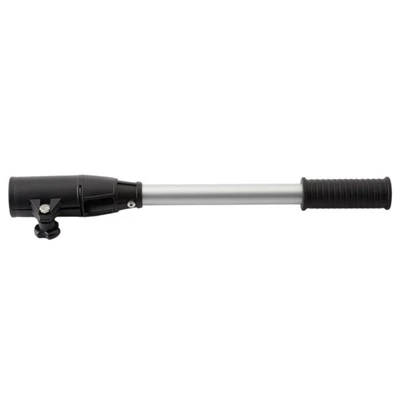
If you’re tired of leaning over hot, smelly motors, if you want more room to move while steering, if you value safety and durability over a $15 Amazon quick fix, reach out to our team. We can help you pick the right size and rating for your specific powerboat, answer any last-minute questions, and make sure you’ve got a tiller extension that’ll last for years, not just one season. We’re here for boating folks, not just making a quick sale, so don’t hesitate to get in touch.
Switch Panels References:
- American Boat and Yacht Council. (2021). Small Craft Steering Systems and Tiller Controls. ABYC Standards Collection.
- U.S. Coast Guard Auxiliary. (2022). Recreational Boater Safety Guide: Steering and Control Equipment for Small Powerboats. USCG Auxiliary Publications.
- National Marine Manufacturers Association. (2023). Marine Accessory Performance Standards for Tiller Extensions. NMMA Technical Reports.
Pan-U Ind. Co., Ltd.
Pan-U Ind. Co., Ltd. is one of the most professional tiller extension manufacturers and suppliers in Taiwan, also supports customized service. Please feel free to buy bulk ISO certified tiller extension made in Taiwan here from our factory. For quotation, contact us now.
Address: 7th Floor, No.270, Section 1, Fuxing Road, South District, Taichung City, Taiwan
E-mail: jessicahan@panutw.com
WebSite: https://www.panumarine.com/
