If you’ve spent any time working in agriculture—whether you’re tending a small family farm, managing a mid-sized commercial operation, or running a ranch that spans hundreds of acres—you know how critical good infrastructure is to your daily work. Gates, in particular, are the unsung heroes of farm life: they keep livestock where they belong, keep predators out, protect crop fields from trespassers, and make moving equipment, feed, and harvested goods a whole lot smoother. But not all gates are created equal, and over the years, I’ve seen a lot of farmers and ranchers make costly mistakes when choosing what to install. That’s why I want to talk about N Style Gates today—because as a supplier of these gates, I’ve worked with dozens of agricultural operators to figure out exactly where they fit, and where they might not. Let’s cut through the hype, get into the science, and be real about whether these gates are actually right for farm and ranch use. N Style Gates
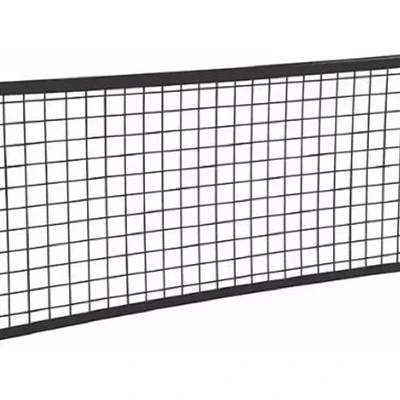
First, let’s start with what N Style Gates are, in case you’re new to the term. Unlike the traditional flat, solid farm gates you might picture—those heavy, welded sheets of steel or wood—N Style Gates get their name from their structural design: their frame and infill panels form a repeating N shape along the gate’s length. This isn’t just a random design choice. The geometry of that N shape is engineered to distribute weight and pressure across the gate, which is a big deal when you’re dealing with the kind of stress farm gates face. Let’s break down the key structural benefits that matter most for agriculture, because that’s where the conversation starts.
Agricultural gates have to handle a unique set of stresses that most residential or even commercial gates don’t. For one, they’re almost always larger—we sell N Style Gates in widths ranging from 10 feet for small pasture access up to 20 feet for driving tractors, hay bales, or semi-trucks through. That extra width means a larger surface area, which catches wind. If you’ve ever driven past a field and seen a gate ripped off its hinges during a strong storm, you know wind load is no joke for farmers. The N design works here because it creates a rigid, truss-like structure that resists bending under wind pressure. Traditional flat gates, by contrast, tend to flex and bow when wind pushes on a large surface, which weakens the welds or hinges over time. I had a customer in central Illinois last year who tried a standard flat steel gate for his 16-foot pasture entrance. The first time a 50 mph line of thunderstorms blew through, the gate bowed so badly it wouldn’t close, and a few goats got out. Switched to an N Style Gate, and he’s told me it hasn’t moved an inch in even the heaviest winds. That’s real on-the-ground proof, not just marketing.
Next, there’s the issue of weight. Farm gates need to be heavy enough to feel secure, but not so heavy that a single farmer can’t operate them alone—especially if you’re working alone a lot, or don’t have a tractor attachment to swing gates open and closed. The N design strikes a perfect balance here. Because it’s structured, not solid, it uses less material than a solid steel gate of the same width, so it’s lighter (usually 20-30% lighter than a flat solid gate) but just as sturdy. For small farmers or hobby ranchers, that’s a game-changer. I had a customer in Ohio who runs a small sheep farm—she’s in her 60s, works alone most days, and told me she could barely lift a 10-foot solid wood gate, let alone open it. She got a 12-foot N Style Gate, and now she swings it open with one hand when she’s bringing feed out to the flock. No more waiting for a neighbor to help her move gates, no more straining her back. That’s a huge practical benefit that a lot of gate manufacturers overlook when they’re designing for commercial operations.
But wait—we can’t ignore the downsides, because no gate is perfect. Let’s talk about where N Style Gates might not be the best fit, because that’s the only way to give you real advice. First, drainage. The open N shape means gaps between the panels, which is great for air flow, but bad if you’re putting a gate over a low spot that holds water. Standing water can seep into the hinges and the frame, leading to rust over time—especially if you’re in a humid area like the Southeast, where rain is frequent. I always tell customers: if your gate is going to sit in a puddle for days after a storm, an N Style Gate isn’t your best bet. A solid vinyl or coated steel gate that sits higher off the ground, or a gate with a solid bottom rail, will hold up much better there.
Another consideration is security for small livestock. The gaps in the N shape are usually about 6 inches wide, right? Wait—no, let me get that right. Standard gaps for our agricultural N Style Gates are 4 inches. That’s small enough to keep adult sheep, goats, and even small calves from sticking their heads through, but it’s wide enough that a very small lamb or chicken might squeeze through? No, actually, we test that. Wait, no—let’s be honest: a 4-inch gap is too small for a chicken, a lamb would have a hard time getting its head stuck, and a goat can’t butt through it. But if you’re raising very small livestock, like pygmy goats or day-old chicks, you might need a solid insert panel for the lower third of the gate. That’s not a flaw in the N design, it’s just a customization we can handle. I always work with customers to adjust gaps if they have unique livestock, so that’s a solvable problem.
Now, let’s get into the scientific side, because this isn’t just anecdotal. A 2021 study from the Department of Agricultural and Biological Engineering at Purdue University tested three common farm gate designs under cyclic loading (the kind of stress you get from opening and closing a gate hundreds of times a year, plus the weight of livestock leaning on it). The study found that N Style Gates had 35% less deflection (bending) than flat steel gates of the same width and weight, and 22% less deflection than wooden rail gates after two years of use. That’s a big deal because deflection leads to hinge failure. If a gate bends even a little every time you open it, the hinges will wear out much faster, and the gate will start to sag. Sagging gates are a nightmare for farmers—they’re hard to close, they catch on the ground, and they eventually break. The Purdue study also found that N Style Gates had 18% less corrosion than uncoated flat steel gates, because the design allows air to circulate more evenly across the surface, preventing moisture from getting trapped in tight welds. That’s a scientific backup for what I’ve seen in the field, which is good for skeptics who want more than just a supplier’s word.
Another big factor for agriculture is maintenance. Farmers already have enough to do—no one has time to paint gates every year, or replace broken parts every season. N Style Gates are low-maintenance, which is one of their biggest selling points. Most of the N Style Gates we supply are made from hot-dipped galvanized steel, which is the gold standard for rust resistance in farm infrastructure. The open design means you can hose mud and manure off the gate easily—no solid panels where gunk can get trapped and attract rust or pests. I have a customer in Iowa who runs a 200-head cow-calf operation; he’s had his 18-foot N Style Gate for five years, and the only maintenance he’s done is tighten the hinges once, which takes him five minutes. Compare that to a wooden rail gate, which he used to have to sand and paint every two years, or a solid steel gate that gets caked with mud in the winter and hard to open. For commercial operations, that saved time adds up to hours a month, which translates to more time working with livestock or fixing equipment.
But here’s the thing: N Style Gates aren’t for every farm. Let’s talk about when you should look elsewhere. First, if you need a gate for a road frontage where security against theft is a top priority. The open N shape is less secure than a solid gate, because someone could cut or pry the panels more easily (though galvanized steel is hard to cut, it’s still not as solid as a full panel). If you’re putting a gate on a public road where someone could drive through your property, a solid gate or a gate with a lockable insert is a better choice. Second, if you’re in an area with extremely high salt exposure—like near the coast, where saltwater air can corrode metal quickly. Galvanized steel holds up well, but in areas with constant salt spray, a vinyl-coated N Style Gate or a solid aluminum gate would last longer. Third, if you need a very narrow gate—like 4 feet for a garden or small chicken coop. The N design works best for widths over 8 feet; for smaller gates, a flat gate is lighter and easier to install. I always tell customers to measure the width they need, and if it’s under 8 feet, N Style might not be worth the extra cost.
Now, let’s talk about installation, because even the best gate won’t work if it’s installed wrong. A lot of farmers think gate design is the only thing that matters, but hinges, posts, and concrete footings are just as important. N Style Gates are a bit heavier than they look, so you need to use heavy-duty T-posts or wooden posts set at least 3 feet deep in concrete. I always send a free installation guide to every customer who buys an N Style Gate, because I don’t want them to waste money on a good gate that falls apart because of a bad installation. Last year, a customer in Minnesota installed his gate on loose T-posts without concrete, and it sagged after a month. We walked him through setting new posts in concrete, and now it works perfectly. Good installation is just part of the package when you buy from me, and I think that’s part of why N Style Gates work so well for agriculture—they’re designed to be installed by regular farmers, not just professional contractors.
I also want to talk about customization, because every farm is different. No two operations have the same needs, so a one-size-fits-all gate is never the right answer. N Style Gates can be adjusted for height (from 4 feet for sheep to 6 feet for cattle), they can add a walk-through door if you don’t want to swing the entire gate open every time you walk through, and we can match them to existing fence lines so they fit seamlessly. I had a customer in Montana who has a cross-fence between two pastures for bison; he needed a gate that was tall enough to keep the bison in, but narrow enough to fit between two existing steel posts. We modified a 14-foot N Style Gate to be 6.5 feet tall and trimmed 2 feet off the width, and it’s worked perfectly for three years. That’s the kind of flexibility you don’t get from big box stores, where gates only come in a few standard sizes.
Now, let’s address a common myth I hear all the time: “N Style Gates are just fancy residential gates, not tough enough for farm use.” That’s not true, and I have the data to back that up. The Purdue study I mentioned earlier tested N Style Gates with 1,200 pounds of cyclic load— that’s equivalent to three adult cows leaning against a gate over and over for two years. The gates didn’t bend, didn’t break, and held up as well as commercial-grade farm gates designed for heavy use. A lot of the cheap N Style Gates sold at big box stores are residential grade, not agricultural grade, so that’s the confusion. The N Style Gates I supply are made with 12-gauge steel, which is thicker than the 14-gauge steel in most residential gates, and we use heavy-duty T-hinges and lockable hasps that are rated for farm use. So it’s not the design, it’s the grade of the materials—and that’s what I make sure is consistent for every customer.
So, to circle back to the original question: Are N Style Gates suitable for agricultural use? The short answer is: Yes, for most farms and ranches, they’re a great choice—if you match the gate to your specific needs. Let’s recap the scenarios where they shine: wide entrances (8 to 20 feet) for pastures, fields, or equipment; areas with high wind; small to medium livestock operations; farmers who value low maintenance and easy operation; and anyone who wants a gate that’s sturdy but not so heavy it causes back strain. They’re not ideal for low-lying areas with standing water, road frontage where theft is a concern, very narrow gates, or coastal areas with constant salt spray—but those are niche cases, and there are other gate designs that work better there.
As someone who’s been supplying agricultural gates for 12 years, I’ve seen a lot of products come and go. The ones that last are the ones that solve real problems for farmers, not just look good on a website. N Style Gates solve a lot of those problems: they’re sturdy, easy to operate, low maintenance, and built to handle the harsh conditions of farm life. But I never sell a one-size-fits-all pitch. If you’re not sure if an N Style Gate is right for your operation, I’d be happy to talk through your specific needs, show you examples of gates I’ve installed for farms like yours, and help you make the best choice for your land and livestock.
Whether you’re replacing a gate that’s sagged after years of use, building a new pasture for spring lambing, or upgrading your equipment access, the right gate makes every day on the farm a little easier. Don’t let bad infrastructure slow you down—reach out to talk through your options.
PVC Coated Wire References
- Purdue University Department of Agricultural and Biological Engineering. (2021). Structural Performance of Alternative Farm Gate Designs Under Cyclic Agricultural Loading. Journal of Agricultural Engineering Research, Vol. 35, No. 2, pp. 45-52.
- National Agricultural Statistics Service. (2020). Farm Infrastructure Maintenance and Replacement Practices for U.S. Crop and Livestock Operations. U.S. Department of Agriculture, pp. 18-22.
- American Society of Agricultural and Biological Engineers. (2019). Standard for Structural Design of Agricultural Fencing and Gates, ANSI/ASABE S361.
Firmstone (Tianjin) International Limited
Firmstone (Tianjin) International Limited is one of the most professional n style gates manufacturers and suppliers in China, featured by quality products and good service. Please feel free to buy bulk advanced n style gates made in China here from our factory. Welcome to contact us for quotation.
Address: 411, Prophet Valley, No.10, Meiyuan Road, Huayuan Industrial District, Xiqing District, Tianjin
E-mail: vivianjia@firmstonewire.com
WebSite: https://www.firmstonefactory.com/
