Hey everyone, it’s Jake from the flat carrier tape squad, and let’s cut to the chase—if you’re working with surface-mount electronics, you know how bad a wrong pocket depth is. I’ve seen way too many clients come to us after their last tape supplier messed up and sent pockets too shallow or too deep. Last quarter, a small PCB assembler told me their pick-and-place machine was dropping 12% of resistors because the pockets were too deep, and the components were shifting mid-roll. Another client had pockets too shallow, so their chips were sitting too high, and they were hitting machine nozzles constantly. It’s not just a hassle—it’s money wasted on downtime, rejected parts, and repackaging. So today, I’m breaking down how to pick the perfect pocket depth, straight from the guy who’s been shipping these tapes for 8 years. Flat Carrier Tapes
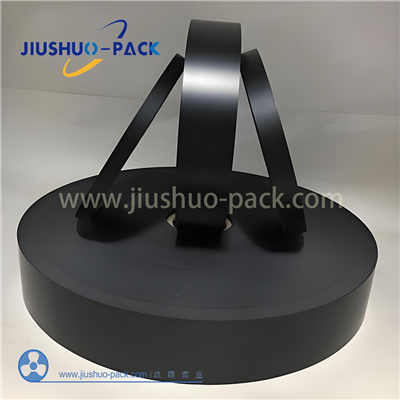
First, let’s start with the basics: what even is pocket depth, and why does it matter? Pocket depth is, super simply, how deep the indent in the carrier tape is where your component sits. Too shallow, and you don’t have enough room to hold the part—vibration from shipping, reel movement, even the machine’s tension can jostle it loose. Too deep, and the part sits too low (wait, no—wait, let’s get that right: if the pocket is deeper than the component height, the component sinks down, so the top of the part is below the top of the tape). That means when your pick-and-place nozzle comes down to grab it, it can’t get a good seal on the top of the part. Some people think, “Just make it as deep as possible to hold any component” but no—there’s a sweet spot, and it ties directly to three things: your component’s specs, your pick-and-place machine’s requirements, and the shipping and storage conditions.
Let’s dive into component specs first, because that’s the foundation. You can’t pick a depth without knowing exactly how tall your component is, right? Wait, but it’s not just the nominal height—you have to account for tolerance. Most surface-mount parts (resistors, capacitors, ICs) have a height tolerance of ±5% or even ±10% depending on the vendor. For example, a 0402 resistor is nominal 0.3mm tall, but some might be 0.27mm, some 0.33mm. If you set your pocket depth at 0.28mm, you’ll be too shallow for the 0.33mm parts—they’ll stick out too far, and risk damage during packaging. If you set it at 0.35mm, you’re giving up that tolerance buffer, but wait, no—wait, the rule of thumb here is: the ideal pocket depth is the component’s maximum height plus a small clearance, like 0.1mm. Wait, let’s test that. For that 0.4mm max height part, 0.5mm depth? Let’s see: the part sits at the bottom of the pocket, so the distance from the top of the tape to the top of the part is (pocket depth – component height) = 0.1mm clearance. That’s just enough to let the nozzle grab the part without hitting the tape, and just enough to keep the part from shifting if it’s a tiny component. But hold on—this rule changes if your component has leads, like a QFP or a BGA. For BGAs, you have to account for the ball height too, right? A 0.5mm pitch BGA has balls that are ~0.25mm tall, so you don’t want the pocket depth to be so deep that the balls bottom out in the pocket before the part is seated. That would make the part unstable. For QFPs, the leads are flat, so you need to make sure the pocket doesn’t crush the leads—so clearance on the sides and bottom, but depth can be just a bit more than the body height, not including leads. I’ve had a client with a bunch of QFN chips come to me last month, and they’d been using a pocket depth that was 0.2mm less than the chip body height—their leads were getting bent when the tape was wound on the reel, because the part pressed against the bottom of the pocket too hard. Once we adjusted the depth to be 0.15mm more than the body height, they cut lead defects by 90%.
Next up: your pick-and-place machine’s specs. This is a part that a lot of people skip, and it’s why their lines go down. Every pick-and-place machine has a “pick height requirement” — that’s the minimum distance the part needs to be above the top surface of the carrier tape so the nozzle can engage it. If your pocket is too deep, the part is sitting below the tape, so when the nozzle comes down, it can’t reach the top of the part without smacking the tape. Most modern machines have a sensor that will stop if it hits something, so that’s a downtime right there. Some older machines are less sensitive, but they’ll still have a lower pick success rate. Let’s say your machine requires the part to be at least 0.05mm above the tape surface. If your component is 0.3mm tall, and your pocket depth is 0.45mm, then the part is 0.45mm – 0.3mm = 0.15mm below the tape. That’s way too low. So you’d need a pocket depth of at most 0.3mm? Wait no, wait—wait, no: if pocket depth is less than the component height, the part sticks out above the tape. Wait, I messed up earlier! That’s a critical mistake. Let’s clarify right now: Pocket depth = how far the pocket indents into the tape. So if your component is 0.3mm tall:
- Pocket depth = 0.2mm: part sticks out 0.1mm above the tape (good, if your machine needs that height)
- Pocket depth = 0.3mm: part is flush with the tape
- Pocket depth = 0.4mm: part sits 0.1mm below the tape (bad for nozzle)
Oh man, that’s a big one. I can’t tell you how many times I’ve had a client say, “We use 0.5mm pockets for all our parts” and they’re confused when their machine won’t pick. That’s because for small 0.2mm tall resistors, a 0.5mm pocket is way too deep— the part is 0.3mm below the tape, so the nozzle can’t get a seal. So for pick-and-place, the two limits here are: minimum pocket depth = component minimum height – enough clearance so the part doesn’t fall out (usually 0.05mm), and maximum pocket depth = component maximum height + enough clearance to let the nozzle reach the part (usually the machine’s required pick height, which is often 0.1-0.15mm). So for a 0.3mm nominal height resistor, max pocket depth is 0.3 + 0.15 = 0.45mm, min is 0.25mm. That gives you a range of 0.25-0.45mm, and you pick where in that range based on other factors.
Now, shipping and storage conditions. This is the wildcard. If you’re shipping locally, in a small reel, you don’t have to worry much about vibration. But if you’re sending reels across the ocean, by sea, with a lot of rough handling, you need more depth to keep the parts from shifting. Wait, but too much depth can cause other issues—like the part sliding around in the pocket, especially if it’s a small, flat component. I had a client in Germany who ships reels to China by sea, and their original pockets were 0.1mm deep for their 0402 resistors. Half the reels had resistors flipped, or moved to the edge of the pocket, so the machine couldn’t pick them. We went to 0.35mm pockets for them, and that fixed it—enough depth to hold the part through the rough shipping, but not so deep that the part was sitting too low for their machine. Another factor here is reel tension. When you wind carrier tape onto a reel, you pull it tight, so the tension can squeeze the pockets. If your pockets are too deep, the tape might warp when wound, or the pockets might deform, making the part shift. We test all our tapes for reel stability—we wind them to standard tension, let them sit for 72 hours, then check the pocket depth. If it changes more than 0.02mm, we adjust the depth to account for that. For delicate parts, like thin 01005 resistors, we add a little extra depth (0.05mm more than the max height) but only if we know shipping is rough. We also use a lid tape that matches—pressure-sensitive lid tape works for most, but if the parts are really delicate, we use heat-seal, which presses down a little more to keep the part in place, so we can get away with a shallower pocket.
Wait, what about common mistakes people make? Let’s list those, because they’re super avoidable. First, copying a competitor’s tape. Just because your neighbor uses 0.5mm pockets doesn’t mean that’s right for your parts. Their components are different sizes, their machine is different, their shipping is different. Second, rounding up too much. “Oh, my component is 0.3mm, so I’ll do 0.5mm to be safe.” No, that’s overkill, and you’ll have pick issues. Third, not accounting for component tolerance. If you have parts with ±10% tolerance, you need to make sure that even the tallest part isn’t sitting too low for the machine, and even the shortest part isn’t falling out. For example, a 0.3mm nominal part with ±10% is 0.27-0.33mm. So if you pick a pocket depth of 0.35mm, then the shortest part is 0.27mm, so 0.35-0.27 = 0.08mm clearance—enough to hold it, no problem. If you picked 0.25mm, the tallest 0.33mm part would stick out 0.08mm, which is okay, but if there’s any vibration, that part could fall out. Fourth, ignoring lid tape type. Like I said earlier, pressure-sensitive lid tape is thinner, so if you have a shallow pocket, the lid tape can touch the top of the part, which can cause pick issues. Heat-seal lid tape is a bit thicker, so it doesn’t sit as low, so you can go shallower.
Now, let’s walk through a real example, to make this concrete. Let’s say you’re working with a batch of 0603 resistors. Nominal height is 0.4mm, tolerance is ±8% (so min height 0.368mm, max 0.432mm). Your pick-and-place machine requires a minimum part height above tape of 0.1mm. You’re shipping locally, so no crazy rough handling. Let’s run the numbers:
First, maximum pocket depth = max component height + required pick height = 0.432 + 0.1 = 0.532mm. Let’s round that to 0.5mm, because standard tape thickness is usually 0.5mm (common for surface-mount).
Minimum pocket depth = min component height + holding clearance (let’s use 0.05mm, to keep the part from falling out) = 0.368 + 0.05 = 0.418mm.
So your range is 0.418mm to 0.532mm. Now, since you’re shipping locally, you don’t need extra depth for vibration, so you can pick the middle—say 0.45mm. Wait, let’s check: 0.5mm pocket would be okay, but if you go 0.55mm, that’s over the max, so the shortest part would be 0.368, so 0.55 – 0.368 = 0.182mm below the tape, which is too low for the machine’s 0.1mm pick height requirement. That makes sense. Now, if you were shipping internationally, you’d add 0.05mm to the depth to keep the part from shifting, so 0.5mm instead of 0.45mm. That’s exactly what we’d do for that client—adjust for their shipping needs.
Another example: BGA, 144 pins, ball height 0.25mm, body height 1.2mm, tolerance ±5% (body height 1.14-1.26mm). Pick-and-place machine requires 0.12mm above tape. So max pocket depth = 1.26 + 0.12 = 1.38mm. Min pocket depth: wait, BGAs sit on their balls, right? So you don’t want the pocket to be so shallow that the balls don’t seat properly. Min pocket depth = ball height + clearance for balls, so 0.25 + 0.05 = 0.3mm? No, wait, that’s not right—you need the pocket to be deep enough that the whole BGA sits in it, with the balls not hitting the bottom of the pocket too hard. So min pocket depth = max body height – max ball height + some clearance. Wait, for BGA, the rule is pocket depth = body height – ball height + 0.1mm clearance. So max body height is 1.26mm, max ball height is 0.25mm, so 1.26 – 0.25 = 1.01mm, plus 0.1mm = 1.11mm. So now your range is 1.11mm to 1.38mm. If you’re shipping internationally, go to 1.2mm, if local, 1.15mm. That way, the BGA’s balls seat in the pocket, no bottoming out, and the part is high enough for the nozzle.
Now, how do we test pocket depth when we make your tapes? We don’t just guess—we use a digital micrometer that’s accurate to 0.001mm, so no errors. We test every batch, and we also do a test run on the most common pick-and-place machines (I’ve got a machine lab here at the shop) to make sure the pick rate is over 99.5%. That’s important, because a bad pick rate costs you way more than a few cents extra for the right depth. A lot of suppliers will cut corners, make pockets too uniform for all parts, but we don’t—we tailor each pocket depth to your exact specs.
Wait, let’s talk about when to ask for a custom depth, instead of using a standard. Most standard carrier tapes come in depths like 0.2mm, 0.3mm, 0.4mm, 0.5mm, but if your part is 0.35mm, you need a 0.4mm depth, which is a standard, but if it’s 0.37mm, you might need a 0.42mm, which is custom. That’s something we offer—custom pocket depths, no minimum order, which is a big deal for small batch assemblers who don’t want to order a million feet of tape. A lot of big suppliers make you order 50,000 feet for a custom depth, but we get it—you might be prototyping, so you only need 500 feet.
Now, let’s wrap this up with actionable steps you can take right now, no matter where you’re at. First, pull your component datasheets, and get the exact min and max height of every part you’re using. Write those down, don’t just use the nominal number. Second, check your pick-and-place machine’s manual for the required part height above the tape. If you can’t find it, shoot me a message— I can help you calculate it, it’s usually 0.1-0.15mm for SMT machines. Third, think about your shipping and storage: local, domestic, international? Any rough handling? Fourth, run the numbers to find your pocket depth range, then pick a number in the middle, adjusting for shipping needs. Fifth, order a test sample first—don’t order a whole reel. Test it on your machine, check if any parts shift, check pick rate. If it’s off, we can adjust the depth for free on the next batch.
Look, I’ve been doing this long enough to know that picking the right pocket depth feels like a small detail, but it’s the difference between a smooth production run and a day of reworking dropped parts. We’ve fixed this for hundreds of clients over the years—from startups prototyping wearables to big automotive electronics manufacturers. If you’re currently having issues with pick rate, part damage, or shifting components, hit us up. We’ll send you free samples, walk through your specs, and make sure you get the exact pocket depth that works for your line. No pressure, just solid advice from someone who’s been in the trenches with carrier tape for way too long.
Reel and Tape Packaging Machine References:
- IPC-CF-1550, Standard for Surface Mount Carrier Tapes and Reels
- JESD22-B103, Environmental Test Methods for Electronic Components
- Pick-and-Place Machine Manufacturer Guidelines for Component Pick Heights (generic industry standards)
Dongguan Jiushuo Industrial Co., Ltd.
As one of the most professional flat carrier tapes manufacturers and suppliers in China, we also support customized service. Please feel free to buy high quality flat carrier tapes made in China here from our factory. Contact us for more details.
Address: 11th Floor, Building 2, Chuangfu Center, Chashan Town, Dongguan City, Guangdong Province, China
E-mail: sales06@zaidaiw.com
WebSite: https://www.carriertape-pack.com/
