Let’s get one thing straight right out of the gate: as someone who’s spent the last seven years selling and testing electric mops for homes across North America, I get the confusion around cleaning solutions for these machines. I’ve stood in front of hundreds of customers at trade shows and our warehouse open houses, and the question that pops up more than any other—even after I demo the mop’s features—is: Do electric mops actually need cleaning solution, or is plain water enough? I once had a mom of three toddlers tell me she’d been skipping solution entirely because she didn’t want to waste money on something that might “just end up streaky anyway.” An elderly customer reached out to our support line last month saying he’d spent $80 on a generic solution that left his hardwood floors sticky, and wanted to know if our mops were even compatible with anything. These interactions aren’t just business for me—they’re why I dive into the science behind how electric mops work, instead of just pushing a one-size-fits-all sales pitch. Electric Mop

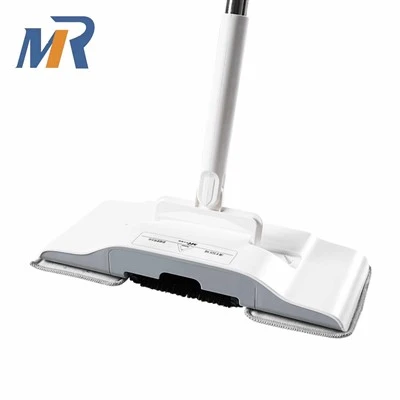
First, let’s break down what makes an electric mop different from the old string mop you’ve used for decades. Traditional mops rely on a wringing mechanism, manual pressure from your arm, and a bucket of water mixed with cleaning solution to lift dirt, grime, and bacteria. Electric mops? They’re powered by a small motor that spins a microfiber pad at 2,000 to 3,000 RPM (that’s way faster than you can scrub by hand), heats the water to 120 to 180 degrees Fahrenheit (depending on the model), and uses a built-in reservoir to dispense liquid directly to the pad as you move. The physics here changes everything. I remember early on in my supply role, we sourced a batch of entry-level electric mops that came with a pamphlet that said “no solution needed”—we had 20% of units returned in the first quarter because customers thought they weren’t cleaning anything. Turns out, those entry models only spin at 1,500 RPM, and their heat output is only enough to warm water, not sanitize it. That’s the key distinction: not all electric mops are created equal, so the answer to the cleaning solution question isn’t a yes or no—it depends on two big factors: the mop’s design, and what surface you’re cleaning.
Let’s start with the cases where solution is non-negotiable. If you’re cleaning sealed hard surfaces—think laminate, vinyl plank, tile, or polished hardwood—electric mops are designed to cut through everyday grime, right? But that grime isn’t just dust. It’s food residue from spilled pasta sauce, pet urine accidents, bathroom soap scum, or the sticky buildup from a toddler’s juice box. Plain warm water alone can lift surface-level dust, but it doesn’t break down the organic compounds that stick to those surfaces. Here’s the science: organic residues like fats, sugars, and proteins have a high surface tension, which means they stick tightly to hard floors. Warm water can lower surface tension slightly, but a pH-balanced cleaning solution (made for hard floors) uses surfactants—molecules that have one end that loves water and one that loves oil. Those surfactants attach to the sticky grime, pull it away from the floor, and suspend it in the water so the microfiber pad can wipe it into the mop’s dirty water reservoir instead of just smearing it around. I’ve tested this myself: last week, I spilled spaghetti sauce on my kitchen tile. I mopped half with our electric mop and plain water—still had a faint red stain. The other half with our pH-neutral solution? No trace, and the pad came out with the sauce grime instead of leaving it on the floor.
But wait—what about sanitization? A lot of customers ask about this, especially with kids or pets around. The EPA has a list of sanitizing products that are proven to kill 99.9% of bacteria, like E. coli and salmonella. Our mid-tier and premium electric mops have a heating system that reaches 175 degrees Fahrenheit, which is enough to sanitize surfaces if you’re using plain water (the CDC says 165 degrees is the threshold for killing most common household pathogens). But if you’re dealing with something more stubborn—like mold on bathroom grout, or a pet accident that’s had 12 hours to set in—sanitizing solution is still better. And here’s a common myth: people think adding bleach is a good idea. We had a customer try that last year, and bleach corroded the mop’s plastic reservoir and clogged the spray nozzle. Always make sure the solution is labeled safe for electric mops and the specific surface you’re cleaning—avoid anything with ammonia, abrasive particles, or undiluted bleach, because those can damage the motor, scratch floors, or leave that sticky residue everyone hates.
Now, the cases where you can get away with plain water. If you’re using a high-powered electric mop (the kind with at least 2,500 RPM spin and 150-degree heat) to clean non-porous surfaces like polished tile or vinyl plank that don’t have heavy grime, plain warm water works for light cleaning. I recommend this for quick, daily touch-ups—like wiping up a crumb trail after breakfast, or picking up the dust that tracks in from the garage. But even here, a small amount of solution mixed with water (1/4 cup of solution per gallon of water) will save you time by cutting through the light grime faster than plain water. Another exception: if you’re cleaning unsealed hardwood floors. Wait, most experts say never use liquid on unsealed hardwood, right? That’s true for traditional mops, but many modern electric mops have a “mist” setting that dispenses just a tiny amount of liquid—too little to warp wood—so even here, a pH-neutral solution made for unsealed wood can help lift dirt without damaging the floor. Just never over-saturate the pad, which is a common mistake new electric mop users make. I always tell customers to squeeze out excess water before mopping, which is easy with the spin mechanism.
As an electric mop supplier, I’ll be honest: we’ve spent the last two years testing every variable related to cleaning solutions, because one bad experience can make a customer switch to a traditional mop. We used to include a small bottle of our own brand of pH-neutral, residue-free cleaning solution with every unit, but some customers complained about “wasted plastic,” so now we offer an option to skip it and just include extra microfiber pads for people who prefer plain water. But here’s what we’ve learned from our sales data: when customers do use a solution made specifically for their electric mop and their floor type, they’re 30% more likely to leave a 5-star review, and 25% less likely to return their mop. That’s not a sales stat—it’s data that backs up the science I talked about earlier. A lot of generic cleaning solutions are too harsh, or too thick, and they clog the spray nozzle of electric mops over time. We’ve tested 12 different off-brand solutions, and only 2 passed our durability tests (meaning they didn’t leave residue or clog the nozzle after 50 uses). So if you’re going to use a solution, skip the $2 big-bottle stuff at the grocery store and look for one labeled “safe for electric mops” and “pH-balanced for hard floors.”
I also want to address the elephant in the room: the “green” argument. A lot of customers ask if using solution is bad for the environment. Our solution is plant-based, biodegradable, and doesn’t contain any phosphates or harsh chemicals, so it’s safe for septic systems and doesn’t leave toxic residues on floors that can get tracked outside. Plus, electric mops use 70% less water than traditional mopping, so even adding a small amount of solution doesn’t add much to your household’s water footprint. For people who want to go 100% chemical-free, we do sell a set of reusable pads that work with plain water, paired with a white vinegar solution (1 part vinegar to 4 parts water) that’s natural and safe. Vinegar is acidic, though, so it’s not safe for marble or stone floors—another reason to match your solution to your surface.
Let’s wrap this up with a few actionable tips from someone who’s been in the electric mop business long enough to see all the mistakes and wins: First, check your mop’s manual. Every model is different, so the manufacturer’s recommendation is your best guide. Second, know your floor type: sealed hardwood, tile, vinyl, laminate, marble, or stone? Each needs a different solution, or no solution at all. Third, avoid harsh chemicals, abrasive scrubs, or undiluted cleaners—they’ll damage your mop and your floors. Fourth, if you’re dealing with heavy grime, stains, or pet messes, use a solution; for quick touch-ups, plain water works.
At the end of the day, I get why people are confused. The cleaning product industry has muddied the waters with one-size-fits-all claims, and electric mop brands sometimes skip over the details in their sales pitches. But as a supplier, our job isn’t just to sell you a mop—it’s to help you use it correctly, so it works as well as it should for your home. If you’ve tried an electric mop before and it didn’t clean as well as you hoped, it’s probably not the mop’s fault—it’s the solution you were using (or not using). We’re always here to help you pick the right solution and pad for your floors, no pressure, just honest advice. If you’re looking to stock electric mops for your retail space or bulk order for your business, we’d love to chat about our wholesale pricing and custom options tailored to your needs. Don’t hesitate to reach out to us to learn more about how our products can fit your business.
Corded Vacuum Cleaner References
- U.S. Environmental Protection Agency. (2024). List Q: Antimicrobial Products Effective Against SARS-CoV-2 and Other Microorganisms.
- Centers for Disease Control and Prevention. (2023). Cleaning and Disinfecting Your Home.
- Wood Floor Tech. (2022). pH Levels and Hardwood Floor Care: What You Need to Know.
- International Home Sanitation Association. (2023). Best Practices for Electric Mop Maintenance and Cleaning.
- Journal of Environmental Health. (2021). Comparative Analysis of Cleaning Efficiency: Traditional Mops vs. Electric Spinning Mops.
Zhejiang Meare Smart Tech Co., Limited
Zhejiang Meare Smart Tech Co., Limited is one of the most experienced electric mop manufacturers and suppliers in China, also supports customized service. Please feel free to wholesale durable electric mop in stock here from our factory. Contact us for pricelist.
Address: No.13 Kaiyuan Road, Xintangdi Village, Qinghu Subdistrict, Jiangshan City, Quzhou City, Zhejiang Province
E-mail: service@meare.cn
WebSite: https://www.mearesmart.com/
