What size are automotive bolts for cars? If you’ve ever spent 10 minutes staring under your hood wondering why that random bolt won’t budge (or fit the new part you just bought), you’re not alone. As a go-to automotive fasteners supplier, I get this question every single day—usually from a DIY mechanic, a shop tech, or even a new car dealer who’s tired of ordering the wrong part and wasting time. Let me break this down straight, no jargon, because when it comes to bolts for cars, size isn’t just a number—it’s non-negotiable. Automotive Fasteners
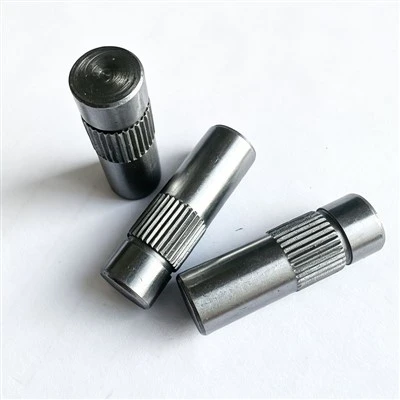
First, let’s get the basics out of the way: automotive bolts aren’t like the random ones you grab at the hardware store. For passenger cars, light trucks, and most daily drivers, the bolt system runs on two main standards—metric and SAE (which stands for Society of Automotive Engineers, but honestly, just call it imperial, no one says SAE out loud anymore). I see so many folks mix these up, and that’s where the mess starts. Metric bolts use millimeters for measurements (so diameters are 10mm, 12mm, etc.), while SAE uses fractions of an inch (like 3/8”, 5/16”). Most modern cars built after the 1980s are metric, but older models (pre-1980s, mostly American-made) often stick to SAE. I can’t tell you how many times a customer’s old Chevy comes in with a 5/16” bolt, and they show up wanting a 10mm—total mismatch.
Now, the “size” part isn’t just the diameter. That’s what trips up even seasoned techs. A bolt’s full spec is: diameter x thread pitch x length (plus the head type, but let’s stick to numbers for now). Thread pitch is the amount of threads per inch (for SAE) or millimeters between threads (for metric)—that’s why a 10mm x 1.5 bolt won’t twist into a 10mm x 1.25 hole. It’s like trying to screw a square peg into a round hole, except the pegs have different numbers of ridges on the outside. I’ve had customers try to force a 12mm x 1.75 bolt into a 12mm x 1.5 hole, and within 10 minutes, the bolt snaps. That’s a $20 fix that turns into a $200 one just because they skipped the thread pitch check.
Let’s talk common sizes you’ll actually run into. For daily driver cars, most bolts fall between 6mm and 16mm metric, or 1/4” to 5/8” SAE. The most ubiquitous? 10mm metric bolts—they’re everywhere: valve covers, wheel lugs (wait, wheel lugs are a whole separate thing), intake manifolds, even some suspension parts. For SAE, 3/8” is super common too, used in brake calipers and steering components. Wheel lugs alone are a big one: most modern cars have either 12mm x 1.5 or 14mm x 1.5 metric lugs, or 1/2” or 9/16” SAE. I see people swap their lug nuts all the time, and half don’t know their lug size until they call us. Pro tip: if you’re working on a 2010+ Toyota, Honda, or Ford, it’s almost definitely metric. A 1970s Pontiac? SAE all the way.
Now, why does this matter beyond fitting a bolt? Automotive bolts aren’t just holding things on—they’re keeping you safe. A bolt that’s the wrong length can bottom out (hit the bottom of the hole instead of clamping the part), and one with the wrong diameter can stretch under pressure. For example, a wheel lug that’s too thin (wrong diameter) can snap when you’re driving on the highway, or a brake caliper bolt that’s too short won’t hold the caliper tight, leading to brake failure. I’ve sourced fasteners for a few race teams before, and they’ll go so far as to use graded bolts (Grade 8 for SAE, 10.9 for metric) for high-stress parts, but even Grade 5 bolts need the right size. Most daily drivers use Grade 2 or 5, but size is still non-negotiable—even a Grade 8 bolt will fail if it’s the wrong size.
Wait, what about specialty applications? Like heavy-duty trucks, performance cars, or electric vehicles (EVs)? EVs are a whole new ballgame, and I’ve seen a lot of our newer clients (EV repair shops) come in asking for different sizes. EVs have heavier battery packs, so bolts for battery trays are usually 14mm to 16mm metric, with higher tensile strength. Performance cars might use larger bolts (16mm to 20mm) for supercharger pulleys or rear differential parts. Heavy-duty trucks can go up to 24mm metric or 3/4” SAE for frame bolts. I even had a customer last month working on a Tesla Model 3 battery, and he needed a 12mm x 1.75 bolt—we had it in stock, but half the suppliers in town didn’t carry that exact pitch.
Let’s clear up a common myth: bigger isn’t always better. I get customers who think, “If a 10mm works, a 12mm will be stronger,” and that’s not true. Bolts are designed to fit specific hole sizes, and forcing a larger diameter can crack the metal of the part it’s going into. For example, a valve cover bolt is only meant to be M6 (6mm) — try to use an M8, and you’ll split the aluminum valve cover, which is a costly mistake. I’ve had one too many customers call me panicking because they ruined a part by grabbing a “bigger bolt,” so that’s a rule I always emphasize: stick to the OEM spec.
So how do you find the right size for your car? Don’t guess—use the owner’s manual. It’ll have every bolt size for every part, from the air filter housing to the transmission. If you don’t have the manual, there are free online databases, but double-check with a parts store or a fastener supplier—online databases can be wrong, especially for older models. If all else fails, bring the old bolt to a hardware store or a supplier like me—we can measure it with calipers (no more guessing with a ruler) and get you an exact match. Just don’t show up with a bolt in your pocket and say, “This looks like a 10mm”—measure the threads too, or it’s useless.
As an automotive fasteners supplier, my job isn’t just to sell bolts—it’s to make sure you get the right one. I’ve seen DIY mechanics waste hours on the wrong bolt, shops lose money on returns, and even cars get held up because someone ordered the wrong size. That’s why we stock every common size—metric and SAE, lengths from 10mm to 100mm, thread pitches from 1.0 to 2.0. We also carry the specialty stuff, like EV battery bolts and performance-grade fasteners, because cars don’t fit a one-size-fits-all mold.
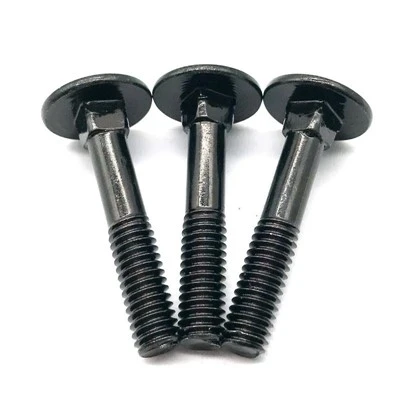
If you’re working on a car, need to replace a random bolt, or even just want to double-check your lug size before a road trip, don’t mess around with guessing. Hit us up to connect for sourcing or to clarify any bolt size questions—we’re here to make sure your repair goes smooth, no more snapped bolts or ill-fitting parts. No runaround, no confusing jargon, just the right fastener for your car.
Screw References
- Society of Automotive Engineers (SAE) Standard J1199: Thread Series for Fasteners in Automotive Applications
- Automotive Fasteners Council (AFC) Technical Report: Size and Specification Guidelines for Passenger Vehicle Bolts
- SAE International. (2021). Metric Fastener Standards for Light Duty Vehicles
- Ford Motor Company. (2020). OEM Fastener Specification Manual for 2015-2020 Passenger Vehicles
- Toyota Motor Corporation. (2019. Metric Fastener Guidelines for Hybrid and Electric Vehicle Battery Systems
Wuyuan Jieyi Automotive Electrical Appliance Co., Ltd.
As one of the most professional automotive fasteners manufacturers and suppliers in China, we’re featured by quality products and good service. Please rest assured to wholesale bulk durable automotive fasteners in stock here from our factory. We also accept customized orders.
Address: No. 7 Likeng Road, Industrial Park Wuyuan County, Shangrao City, Jiangxi Province
E-mail: wyjydqz@163.com
WebSite: https://www.wyjydq.com/
