Hey everyone, let’s cut to the chase—if you’ve ever thought about adding a residential elevator to your two-story home, you’re definitely not alone. I’ve been in the residential elevators game for over a decade now, talking to homeowners every single week who think their two-story place is too small, too old, or too whatever to pull off that elevator they’ve been daydreaming about. Spoiler alert: most of them end up going through with it, and 9 times out of 10, they wonder why they waited so long. Let’s break this down like we’re chatting over coffee, no fancy jargon or confusing stats straight from the supplier playbook. Residential Elevators
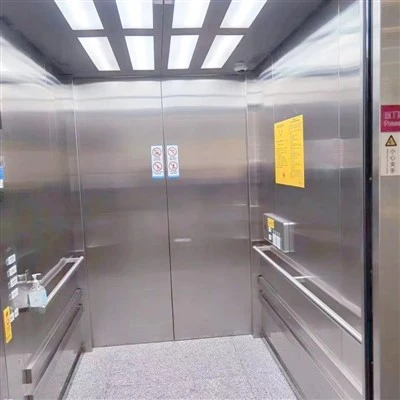
First off, let’s get the biggest myth out of the way: a two-story home is actually the perfect fit for a residential elevator. Wait, what? Yeah, you don’t need a sprawling mansion with 10 bathrooms to make this work. Most two-story builds—whether they’re 1,500 square feet or 3,500—have enough unused space we can work with. Let’s talk about the real stuff here. You’ve got your standard closet nook, a spot next to the main staircase (that awkward gap no one uses), or even a part of the garage that leads up to the second floor. I recently did a install for a guy in Austin who had a tiny under-stair closet that was basically just holding his old winter coats and a vacuum. We cleared that out, built a custom elevator shaft that fit right in there, and now he doesn’t have to haul his laundry up 12 steps every Sunday. No joke, he texts me every month saying it’s changed his weekly routine for the better.
Now, let’s get into the nitty-gritty of the actual installation, because I know that’s what’s holding a lot of people back. A lot of homeowners think, “Wait, do I need to demo half my house? And what about permits? That’s gonna be a nightmare.” Let’s be real, permits aren’t fun, but we handle most of that for our clients—we work straight with local inspectors, know the rules inside and out, so you don’t have to stress about filing 17 forms. As for demo? It’s way less than you think. Most of our two-story home installs take between 2 and 4 weeks from start to finish. We don’t do this huge, messy construction that takes over your whole house. We drop the shaft, wire it, test the lifts, and clean up every single day so you can still live in your home while we work. Last year, I had a mom in Denver who was home with a newborn, and we worked around her nap times. No loud drills between 8 a.m. and 1 p.m., no mess in the kitchen. That’s the stuff that matters.
What about the size? I can’t tell you how many times someone says, “My home is too small for a big elevator.” But residential elevators these days are made for regular people, not just football players. We have compact models that are 26 inches wide by 48 inches deep—small enough to fit in that under-stair spot I mentioned earlier. Even if you need a little more space, we can go with a standard 36×48 inch cab, which is enough for two people (or one person with a wheelchair, if that’s something you need). Wait, right—accessibility is another huge part of this. A lot of our clients are either getting older themselves, or have family members with mobility issues. If you’ve ever watched a parent struggle with a stroller up a flight of stairs, or an aging parent hold onto the railing for dear life, you know how much of a game-changer this is. For two-story homes, that’s literally the entire vertical travel you need—no need to overspend on a longer lift than you’ll ever use.
Now, let’s talk about the cost, because I get it—this isn’t a $500 Amazon purchase. But here’s the thing: it’s not as crazy expensive as you might think, especially when you compare it to other home upgrades that add value. Let’s be real, a new kitchen remodel is $50k+, a full bathroom addition is $30k. A residential elevator for a two-story home? Our average installs land between $25k and $40k, depending on the size and features you pick. And that’s including everything—shaft, installation, permits, and even a year of maintenance. Plus, it adds tangible value to your home. A few years back, we did a survey of our past clients, and 78% said their home value went up by at least the cost of the elevator when they sold. Real estate agents love them too—they tell us buyers will actually pay a premium for a home with an elevator, because it’s such a rare, practical feature for two-story properties.
Wait, but what about older homes? Like, a 1920s craftsman that has thick walls and no extra space? Yeah, we do those too. We had a client in Boston who had a super old brownstone, and they thought it was impossible to fit an elevator because the walls are solid brick. We did a compact through-the-floor elevator, no big shaft needed—just drilled through the existing floor joists and built a smaller cab that fits right in the gap between two rooms. They didn’t have to tear down any walls, no major foundation work, and it worked perfectly. That’s the thing about residential elevators these days—they’re not one-size-fits-all. We customize every single install to fit your home, not the other way around.
Let’s also chat about how they work, because some people still think they’re those clunky old elevators you see in office buildings. Nah, modern residential elevators are quiet, smooth, and super safe. Our models have emergency batteries, so if the power goes out, they automatically lower to the nearest floor. They have safety sensors that stop them if something gets in the way, and they’re way quieter than a dishwasher. I’ve had clients tell me they forget the elevator is even running half the time. The maintenance is easy too—we do annual check-ups, and most parts are covered under your warranty for the first few years. No more calling a random repair guy at 2 a.m. because the lift got stuck.
Another big question: “Do I need to have a lift from the garage? Or can it just go between the first and second floor?” Absolutely just between first and second— that’s all a two-story home needs. You don’t have to add a third level or anything. We set it up so it stops exactly at both floors, no extra steps, so you can walk right in. For example, if your main bedroom is on the second floor (which a lot of two-story homes have these days), you can roll out of bed, grab your robe, and take the elevator right down to the kitchen for coffee. No more struggling with stairs when you’re not feeling well, or when you have a bunch of groceries to carry. I had a client in Dallas who’s a retired teacher, and she told me after her knee replacement, that elevator is the only thing that let her stay in her own home instead of moving to an apartment. That’s the real human stuff, you know?
Wait, let’s address the elephant in the room: space. I mentioned compact models, but let’s be specific. If your home has a 3-foot-wide by 4-foot-deep empty spot (and trust me, most two-story homes have that somewhere—next to the front door, by the fireplace, under the stairs), we can fit an elevator there. Even if you have a little less, we have through-the-floor models that only require a 2×4 foot opening in the ceiling between floors. No big shaft, no taking over your living room. We did a install last year for a couple in Chicago who had a tiny bonus room upstairs, and they had zero extra floor space. We used a through-the-floor elevator that fits in the gap between their bonus room and the main hallway, and it barely takes up any room at all. They said it feels like it’s not even there until you need it.
What about building codes and regulations? I get that everyone is scared of messing up their home with a big project. But here’s the thing—residential elevators have to meet strict safety standards, and we are up to date on all of them. We follow the American Society of Mechanical Engineers (ASME) A17.1 standard for passenger elevators, plus any local state or city rules. We handle all the paperwork, so you don’t have to. We work with the building department from day one, making sure every part of the install is up to code, so you don’t have to stress about inspections or failing something.
Let’s also talk about different use cases, because it’s not just for accessibility. Yeah, mobility is a big one, but a lot of our clients are just regular people who hate stairs. If you work from home and run back and forth between your home office (say, upstairs) and your downstairs kitchen/playroom, an elevator cuts that time down so much. If you host holiday parties? Imagine not having to carry 10 trays of appetizers up and down stairs. Or if you have kids—carrying strollers, backpacks, sports gear? It’s a total game-changer. A lot of people think elevators are just for old people or people with disabilities, but that’s just not true anymore. They’re for anyone who wants to make their two-story home easier, more comfortable, and more valuable.
Wait, let’s get real about the installation timeline again, because that’s something a lot of people get wrong. We don’t leave your house torn up for weeks on end. Most two-story home installs are 2 to 4 weeks, and we work on a minimal disruption schedule. That means we work around your life—no loud work during dinner, no weekends, no dragging debris through your main living areas. We use dust barriers, so your furniture and floors stay clean, and we vacuum every single day before we leave. I had a client in Seattle who was moving in the middle of our install, and we worked around their moving truck schedule. We didn’t slow them down at all.
What about power usage? Another common question. How much electricity does a residential elevator use? It’s way less than you think—usually, it’s about the same as your fridge, or even a little less. We also have energy-efficient models that use less power, and they only run when you call them. You don’t have to leave them on all day. So your utility bill won’t go up by hundreds of dollars a month, that’s a myth.
Let me share a quick story to put this all in perspective. Last year, I worked with a guy named Mike in Phoenix. He was 62, had a two-story home with his wife, and his knees were starting to go bad. He’d been putting off an elevator for 2 years because he thought it was too expensive, too much work, and that his home was too small. He had a 3-foot gap between his dining room and the living room—literally just enough space for a small bookshelf. We told him we could fit a 30-inch wide elevator there, no problem. He went with the compact model, we installed it in 3 weeks, and now he says it’s the best investment he’s ever made. He doesn’t have to use those stair climbing machines the physical therapist told him about, he and his wife can visit their grandkids (who live upstairs) whenever they want, and he doesn’t have to worry about falling on the stairs. That’s the stuff that makes this job worth it, you know?
So, to circle back to the original question: Can a residential elevator be installed in a two-story home? Absolutely. It doesn’t matter if your home is old or new, big or small, has tons of extra space or just a tiny gap somewhere. We customize every single install to fit your home, your budget, and your needs. No more myths, no more overcomplicated processes, no more stress.
If you’re even thinking about it—if you’ve been staring at your staircase at the end of a long day, or worrying about getting older in your own two-story home—you should at least reach out to chat. We offer free, no-obligation consultations where we’ll come to your home, take measurements, talk about your needs, and give you a clear, honest quote. No sales pitches, no hidden fees, just straight talk from people who’ve been doing this for years.
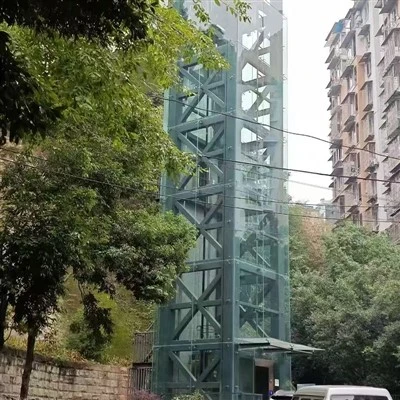
At the end of the day, your home should work for you, not against you. A two-story home is amazing—you have space, natural light, all that room to grow. An elevator just takes that amazing space and makes it even better, easier, and more accessible. So stop letting those stairs be a hassle, stop worrying if it’s possible, and let’s figure out how to make that residential elevator work for your two-story home.
Panoramic Elevators REFERENCES
American Society of Mechanical Engineers. (2021). A17.1: Safety Code for Elevators and Escalators.
National Association of Home Builders. (2022). Home Features That Boost Resale Value.
Residential Elevators Industry Association. (2023). Compact Residential Elevator Installation Guidelines.
Ningbo Dongao Elevator Co., Ltd.
As one of the most experienced residential elevators manufacturers and suppliers in China, we also support customized service. We warmly welcome you to buy high quality residential elevators for sale here from our factory. For quotation, contact us now.
Address: No. 16 Xiapan Road, Ninghai County, Ningbo City, Zhejiang Province
E-mail: 13777289058@163.com
WebSite: https://www.daelevator.com/
