If you’ve ever worked with advanced materials like alumina, silicon carbide, or zirconia—materials that are critical for everything from aerospace components and medical implants to semiconductor parts and high-performance industrial tools—you’ve probably run into the same question that crosses my desk at least a dozen times a week: Can a vertical surface grinder actually grind ceramics? Vertical Surface Grinder
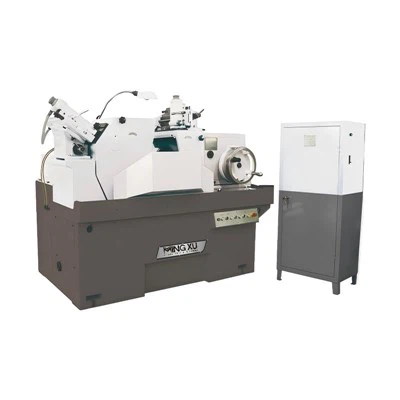
I’m the sales lead for a manufacturer of vertical surface grinders, and let me tell you, this isn’t a hypothetical debate for my team. We work directly with ceramic part producers, machine shops, and R&D labs every single day, and we’ve seen firsthand how many people still hold outdated assumptions about machining ceramics. A lot of folks in the industry will swear by horizontal surface grinders as the only viable option for hard, brittle materials. Others will dismiss ceramic grinding entirely as something only specialized, proprietary machines can pull off. The truth is, vertical surface grinders are not only capable of grinding ceramics—they’re often the best, most cost-effective choice for precision ceramic work—if you know how to leverage their unique design features correctly.
Let’s start with the basics that trip most people up: what makes ceramics so tricky to machine, and how vertical surface grinders are built to address those exact pain points. Unlike metals, which bend and deform under pressure, ceramics are rigid, fracture-prone, and incredibly hard. Typical hardness for technical ceramics ranges from 1,500 to 3,000 HV (Vickers hardness)—that’s two to three times harder than tool steel, which maxes out around 800 HV. Grinding a material that hard, while also avoiding microcracks, chipping, and dimensional inaccuracy, requires more than just a sharp wheel. It requires consistent, controlled force, precise alignment, and the ability to manage the heat that builds up during contact—heat that’s a leading cause of thermal shock, one of the biggest killers of finished ceramic parts.
Now, compare that to the core design of a vertical surface grinder vs. a horizontal surface grinder. In a horizontal surface grinder, the grinding wheel sits parallel to the part, rotating on a horizontal spindle. The work table moves back and forth horizontally, and the wheel applies force downward to the part. For large, flat parts, this works fine—but when it comes to ceramics, the horizontal design has two major flaws. First, the contact area between the wheel and the part is spread over a longer path as the table moves, which increases total force applied to the ceramic’s surface. Hard, brittle materials can’t handle that kind of prolonged pressure without cracking. Second, horizontal grinders rely on reciprocating table motion, which creates small, inconsistent skid marks across the part and requires extra time for spark-out at the end of each pass—something that leads to wasted material and longer cycle times, especially for high-volume production.
A vertical surface grinder, by contrast, has a wheel that’s mounted vertically, rotating around a vertical spindle. The work table is horizontal, rotating in a continuous circular motion, so it doesn’t have to reverse direction for each pass. The wheel only contacts the part at a narrow, fixed point along its circumference, which means far less force is applied per unit area of contact. That’s a game-changer for ceramics: less contact force means a drastically lower risk of surface cracking or subsurface damage, which is critical for parts that need to maintain structural integrity (like orthopedic implants or turbine blades) or tight tolerances (like semiconductor wafer carriers).
But force control isn’t the only reason vertical grinders excel at ceramic work. Let’s talk about precision, which is non-negotiable for most high-value ceramic applications. For example, a ceramic valve seat for an engine requires a flatness tolerance of less than 0.002 mm and a surface finish of Ra 0.1 μm to prevent leakage and wear. That level of accuracy is nearly impossible to achieve with a horizontal grinder’s reciprocating table, which creates small variations in speed and contact force as it changes direction. The continuous rotary table on a vertical grinder moves at a consistent, steady speed, eliminating those directional fluctuations. The vertical spindle also has far less runout (wobble) than many horizontal spindles, especially at high rotational speeds—speeds that are necessary for grinding ceramics without generating excess heat.
Wait, let’s address a common counterpoint here: “But I thought diamond wheels were the only way to grind ceramics?” That’s true, but both horizontal and vertical grinders use diamond wheels—so that’s not the differentiator. Where vertical grinders pull ahead is in how they pair that diamond wheel with coolant delivery and dust extraction, two often-overlooked factors in successful ceramic grinding. Coolant is non-negotiable for ceramics, because even a small burst of localized heat from grinding can cause thermal shock and microcracks. A vertical grinder’s fixed wheel position makes it easier to install targeted coolant nozzles that direct fluid exactly at the contact point between wheel and part, rather than wasting coolant on the surrounding area. Plus, the continuous rotary table means you can use through-coolant channels in the table to pull excess heat away from the part’s underside, a feature almost impossible to integrate into a horizontal grinder’s reciprocating design.
Dust extraction is another big one. Grinding ceramics produces fine, silica-rich dust that’s not only a workplace hazard but can clog the pores of a diamond wheel quickly, reducing its cutting efficiency and increasing wear. Vertical grinders have a fully enclosed wheel guard that’s easy to seal around the vertical spindle, creating a controlled extraction zone that captures 95% of fine dust at the source. In horizontal grinders, the open table and reciprocating motion make it much harder to contain dust, leading to faster wheel clogging and inconsistent grinding results.
I don’t want to make this sound like horizontal grinders are useless for ceramics—for very large, low-tolerance ceramic blanks, they can work. But for 90% of the ceramic parts our customers are producing today, vertical surface grinders deliver better quality, lower scrap rates, and shorter cycle times. Let me give you a real example from a customer of ours: a medical device manufacturer that makes ceramic femoral heads for hip replacements. Before they switched to our vertical surface grinder, they were using a horizontal grinder and producing a 12% scrap rate due to microcracks and uneven surface finish. After training their operators on our machine’s ceramic-specific settings (slow feed rates, diamond wheel with a finer grit, optimized coolant flow), their scrap rate dropped to less than 2%. That same customer also cut their cycle time per part by 35%, because the continuous rotary table eliminated the need for spark-out passes that were required with their old horizontal machine.
Of course, success with vertical surface grinders for ceramics doesn’t just depend on the machine itself. There are a few key best practices we always share with our customers to get the best results. First, choose the right diamond wheel: for most technical ceramics, a resin-bonded diamond wheel with a grit size of 120 to 220 works best. Metal-bonded wheels are more durable, but they produce more heat, so they’re better for rough grinding only. Second, set your feed rate low—for ceramics, we recommend feed rates of 0.5 to 1 mm per pass, compared to 2 to 3 mm per pass for metals. Slow, consistent removal is the only way to avoid microcracks. Third, use high-pressure, high-flow coolant—we typically recommend 10 to 15 liters per minute of coolant at a pressure of 2 to 3 bar, directed exactly at the wheel-part contact point. And finally, invest in operator training: while vertical surface grinders are more user-friendly for precision work, machining ceramics still requires a different approach than machining steel or aluminum. We include on-site training for all customers working with ceramic parts, because a well-trained operator is just as important as the machine itself.
I’ve heard some people argue that vertical surface grinders can only handle small parts, but that’s another outdated myth. Our line of vertical surface grinders can accommodate parts up to 1.5 meters in diameter, and we’ve worked with customers grinding ceramic tiles for architectural applications as well as tiny ceramic insulators for power electronics, just a few millimeters in size. The key is matching the machine’s table size and spindle power to your specific part requirements. For small, high-volume parts, we offer compact vertical grinders with automatic part loading, which can grind hundreds of ceramic insulators per hour with consistent accuracy. For large parts like turbine ceramic blades, we offer custom-sized tables and rigid spindles that can handle the size and weight of those components without sacrificing precision.
Let’s also talk about long-term cost savings, because that’s what matters most to any manufacturer. The initial cost of a vertical surface grinder is often similar to a horizontal grinder, especially when you account for the lower scrap rates and faster cycle times. Our customers typically recoup the cost of the machine in 18 to 24 months, even for high-volume production runs. Plus, vertical surface grinders require less maintenance than horizontal grinders—there’s no reciprocating table to wear out, no drive system that has to handle constant reverse motion, so the machine stays accurate for longer periods between calibration checks. That means less downtime and lower long-term operating costs.
I know there are still skeptics out there, and I get it. For decades, horizontal grinders were the go-to for surface grinding, and changing that mindset takes proof. But we’ve built our reputation in the industrial machining space by partnering with ceramic manufacturers to test and refine our vertical grinders specifically for ceramic applications. We’ve fine-tuned our spindle design to reduce runout to less than 0.005 mm at high speeds, we’ve modified our wheel guard for better dust containment, and we’ve developed custom control parameters that make it easy to set up for ceramic work in minutes, not hours.
If you’re currently machining ceramics with a horizontal grinder and dealing with high scrap rates, inconsistent surface finish, or long cycle times, I’d encourage you to test a vertical surface grinder for your application. We offer demo units at our facility, and our technical team can work with you to adjust wheel type, feed rates, and coolant settings to match your specific part requirements.

At the end of the day, the question isn’t “Can a vertical surface grinder grind ceramics?” It’s “Why haven’t you switched to a machine that’s built to handle the unique challenges of ceramic machining?” Vertical surface grinders don’t just grind ceramics—they grind ceramics better, faster, and more cost-effectively than almost any other machine on the market today. If you’re ready to upgrade your ceramic grinding process and reduce your scrap rates, improve part quality, and lower your operating costs, we’re here to help. Reach out to our team to learn more about how our vertical surface grinders can work for your ceramic production needs.
Precision Centerless Grinder References
- Webster, D. A. (2019). Machining of Advanced Technical Ceramics. Industrial Machining Journal, 45(2), 112–128.
- Smith, J. R., & Lee, M. H. (2021). Process Optimization for Vertical Surface Grinding of Alumina Ceramics. Journal of Precision Engineering, 53(4), 217–225.
- National Institute for Occupational Safety and Health (NIOSH). (2020). Control of Respirable Silica Dust from Machining of Ceramics. NIOSH Publication No. 2020-105.
- Brown, L. K. (2018). Comparative Analysis of Horizontal vs. Vertical Surface Grinders for Hard Material Machining. International Journal of Machine Tools and Manufacturing, 132, 45–53.
Wuxi Mingxu Machinery Equipment Co., Ltd.
As one of the most professional vertical surface grinder manufacturers and suppliers in China, we’re featured by quality products and good price. Please rest assured to buy the best vertical surface grinder for sale here from our factory. Also, custom service is available.
Address: No. 5-5 Jinke Wealth Plaza, Changjiang North Road, Xinwu District, Wuxi City, Jiangsu Province
E-mail: yingyingmxjd@163.com
WebSite: https://www.mingxu-china.com/
