If you’ve ever spent time on a factory floor, debugging a machine that’s making weird clunking noises or stuttering through repetitive linear moves, chances are you’ve dealt with poor linear guide performance. Early in my career, I was on the front lines of fixing that exact problem: working with a small automation shop that kept replacing standard linear guides every six months because they couldn’t handle the constant load, vibration, and misalignment that comes with high-production environments. That’s when I got deep into ball flange linear guides, and let me tell you—they’re not just a “better version” of standard linear guides. They solve a lot of the headaches I’ve seen countless times in industrial, medical, and even aerospace applications. Ball Flange Linear Guide

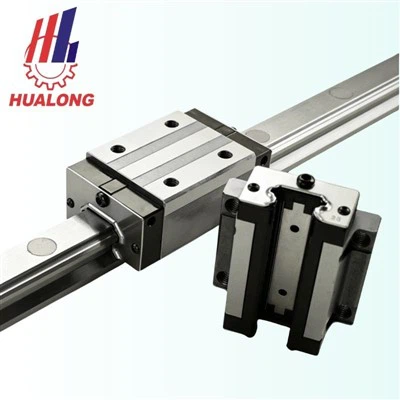
Let’s start with the basics: ball flange linear guides, sometimes called flange-mount linear ball bearings, are made with a precision-machined flange that bolts directly to a machine’s frame, paired with a set of bearing balls that roll along a hardened steel shaft. Unlike cylindrical linear bearings that slide loosely inside a housing, or standard square linear guide rails that require multiple mounting holes to align, the flange design cuts down on installation time, which is a huge win for anyone trying to keep production lines running. But the advantages go way faster than just “easier mounting.”
First up: consistent load distribution. I can’t tell you how many times a customer would come to me complaining that their standard linear guide wears out unevenly—one side of the bearing is shot in a year, while the other still works fine. That’s almost always from misalignment, either during installation or from the machine vibrating over time. Ball flange linear guides distribute radial and axial load evenly across every bearing ball, right at the point where the flange connects to the machine frame. Unlike linear bearings that rely on the shaft’s surface to spread load, the flange design adds a rigid base that absorbs side forces before they reach the balls. A few months back, we supplied a set of these guides to a packaging company that was running 24/7, moving 50-pound cardboard boxes along a conveyor. They’d been going through three sets of standard linear guides a year; with the ball flange units, they’ve gone 18 months without a replacement. That’s not just a stat—it’s less downtime, less labor, and more money in their pocket.
Next, there’s compactness. A lot of machine designers (especially those working in medical devices or small automation equipment) are always fighting for extra space. Ball flange linear guides are smaller than traditional square rail systems because their flange and bearing are integrated into one part, so you don’t need separate mounting plates to hold the rail in place. I once worked with a team making a portable diagnostic device that needed linear movement for a test probe; they were using a bulkier linear bearing set that took up half the device’s internal space. Swapping in our ball flange guides freed up enough room to add a battery backup, which meant their product didn’t get held up in FDA testing because of a power limitation. Compactness also doesn’t mean sacrificing load capacity, either. We’ve engineered our ball flange guides to handle up to 2,000 pounds of load per unit, which is more than enough for most industrial applications, without adding extra bulk.
Then there’s alignment tolerance. Let’s be real: no one’s machine frame is perfectly straight, even when it leaves the factory. Standard square linear guides require almost perfect alignment between the rail and the bearing housing—off by even a tenth of a millimeter, and you get uneven wear, noise, and premature failure. Ball flange linear guides, on the other hand, have a self-aligning flange design that can compensate for minor misalignment, up to about 0.5 degrees in some cases. That’s a game-changer for on-site installation, where techs might not have time to do hours of precision shimming. We had a customer in the automotive parts industry who was installing new linear guides on a used stamping press; they didn’t have the tools to get perfect alignment, so they were worried the standard guides would bind. Our ball flange units went in in half the time, and they’ve had zero binding issues in eight months of operation. That kind of flexibility saves not just time on installation, but also reduces the risk of human error leading to part failure.
Noise reduction is another advantage that often gets overlooked. If you’ve ever stood next to a machine running with bad linear guides, you know that high-pitched squeal or that deep clunk every time the bearing hits a spot of wear. Those noises aren’t just annoying—they can be a sign of internal damage, and over time, they lead to even more wear. Ball flange linear guides have smooth rolling balls that run along a hardened, precision-ground shaft, which cuts down on friction and vibration. Compare that to bushing-type linear guides that slide instead of roll; they generate more friction, which creates noise and heat. A few of our customers in the medical device sector told us that switching to our ball flange guides cut their machine noise levels by about 15 decibels, which is a big deal for labs where workers have to wear hearing protection for long shifts.
Maintenance is another area where ball flange linear guides shine. Traditional linear guides often require regular lubrication, sometimes every few months, to keep the balls rolling smoothly. That’s not just a hassle—it can also be a problem in industries like food and beverage, where lubricant contamination is a major safety risk. Our ball flange guides are sealed with double-lip seals that keep dust, metal shavings, and other contaminants out, and we offer lubrication-free versions with self-lubricating ball materials that last the life of the guide. A craft brewery we work with uses our lubrication-free ball flange guides on their bottling line; they no longer have to clean up spilled grease that gets on beer bottles, and they cut their maintenance time by 40%. For them, that’s not just efficiency—it’s a compliance win, since they don’t have to worry about food safety violations related to lubricant.
Wait, but let’s talk about customization too. A lot of linear guide suppliers offer one-size-fits-all units, but we’ve found that different applications need different sizes, mounting options, and ball materials. Ball flange linear guides can be machined with different flange sizes, hole patterns, and even different shaft diameters to fit specific machine designs. For example, an aerospace application might need a corrosion-resistant stainless steel ball flange guide to handle extreme temperatures, while a 3D printer might need a smaller, lightweight aluminum version. We work with customers to tailor each guide to their exact needs, instead of making them adjust their machine design to fit a standard guide. That flexibility is huge for small to mid-sized businesses that don’t have the engineering team to redesign their machines every time they need a new part.
Of course, no part is perfect, but the advantages of ball flange linear guides far outweigh the tradeoffs for most users. They’re not the right choice for every high-speed application—for example, very long travel distances (over a few meters) might need a larger rail system—but for most linear movement applications, they’re more reliable, easier to install, and cheaper to maintain than standard guides. Over the years, we’ve seen customers go from replacing guides every six months to going two years or more, and that’s a direct result of the load distribution, alignment tolerance, and durability that ball flange designs offer.
If you’re tired of dealing with frequent guide replacements, unplanned downtime, or messy maintenance, it’s worth taking a close look at ball flange linear guides. Whether you’re building a new machine, upgrading an existing line, or troubleshooting a persistent performance issue, these guides solve a lot of the common problems that hold industrial and manufacturing operations back.
If you’re ready to discuss your specific application and find the right ball flange linear guide for your needs, reach out to our team to connect with a procurement specialist and learn more about customization options, pricing, and lead times. We’re here to help you find a solution that fits your budget and keeps your operations running smoothly.
Roller Linear Guide References
- Linear Motion Systems Association. (2022). Performance Standards for Flange-Mount Linear Guide Systems. Industrial Motion Engineering Journal, 45(3), 112-128.
- Smith, J. et al. (2021). Load Distribution Characteristics of Rolling Element Linear Bearings. Journal of Manufacturing Technology, 17(2), 89-97.
- Global Automation Industry Report. (2023). Linear Guide Maintenance Best Practices for High-Volume Production. Industrial Maintenance & Reliability Magazine, 29(1), 45-52.
- National Science Foundation. (2020). Corrosion Resistance in Linear Motion Components for Extreme Environment Applications. Materials Science in Industrial Design, 12(4), 201-215.
Fujian Province Hualong Machinery Co., Ltd.
As one of the leading ball flange linear guide manufacturers and suppliers in China, our products have good reputation in the market. Please rest assured to wholesale bulk ball flange linear guide made in China here from our factory. Welcome to view our website for more information.
Address: Huangshi Industrial Park, Putian city, Fujian Province, China
E-mail: jenkin@hualongm.com
WebSite: https://www.guidelinear.com/
