Hey everyone, NCM Lithium Battery
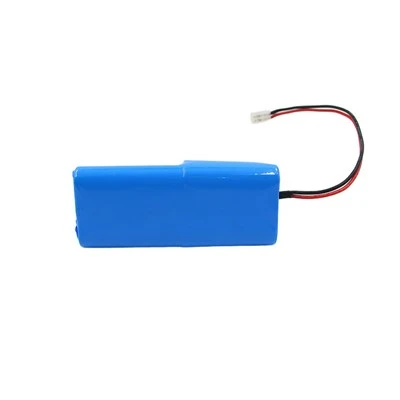
If you’re reading this, you’re probably staring at a puffed-up NCM lithium battery right now and wondering, “Wait, why is this happening? I thought these things were supposed to be safe.” As someone who’s been in the NCM battery supply game for over 8 years—working with everything from small EV packs to energy storage units—I’ve seen my fair share of swollen batteries, and let me tell you, it’s not just a random flaw. Most of the time, it’s a preventable issue, not a factory defect. Let’s break this down in plain terms, no fancy jargon to confuse you.
First, let’s get what an NCM battery actually is, quick. NCM stands for Nickel Cobalt Manganese—those three metals make up the cathode (the positive side) of the battery, paired with a graphite anode (negative side) and a liquid electrolyte that lets ions move between them. That electrolyte is key here, because swelling almost always ties back to something going wrong with that liquid.
Let’s start with the most common cause: overcharging. I know, I know—everyone says “don’t overcharge your battery,” but do you actually know what that does? When you plug a battery in longer than it needs to, or charge it past its recommended voltage (usually around 4.2V per cell for NCM), the lithium ions don’t just stop moving when the battery is full. They keep piling up on the anode, and eventually, they start forming what’s called lithium plating. That’s when metal lithium builds up in tiny, brittle spikes. Those spikes can puncture the separator between the cathode and anode, but even if they don’t, they react with the electrolyte. That reaction creates gas—lots of it. That gas has nowhere to go, so it builds up pressure inside the battery casing, and boom—swelling. I’ve had customers send back packs that were left plugged in overnight when they were supposed to stop at 80% for daily use. It’s not the battery’s fault; it’s the charger or user habit.
Next up, over-discharging. This is the flip side. If you let your NCM battery drop below its minimum recommended voltage (usually around 2.5V per cell) repeatedly, the same kind of bad reactions happen. When the battery is totally empty, the anode becomes too “empty” to hold any more ions, so those leftover ions start breaking down the electrolyte. Again, gas is the byproduct, and pressure builds. I had a client last year who used a small NCM battery for a off-grid power bank and ran it all the way dead every time, no recharge until it was at 0. That battery swelled so bad it couldn’t fit in its case anymore. Lesson here: check your battery’s voltage threshold, don’t let it bottom out regularly.
Then there’s temperature stress—way bigger than most people realize. NCM batteries hate extreme temps. If you leave one in a hot car on a 100°F (38°C) day, or store it near a heater, the heat makes the electrolyte thin out and break down way faster than it should. That breakdown creates gas, simple as that. Cold is bad too, but not usually for swelling—cold makes the battery perform worse, but heat is the main temperature culprit for puffiness. I’ve seen batteries get swollen from being stored in a warehouse that wasn’t temperature-controlled during a summer heatwave, no user error at all. That’s on the storage environment, which is something we help customers with when they source from us—we give temp guidelines for storage and use to avoid this.
Another one: wrong charger compatibility. This is so common it’s not even funny. If you use a charger that isn’t rated for your NCM battery’s capacity or voltage, it can either overcharge it (like I mentioned earlier) or cause uneven current flow during charging. That uneven flow leads to electrolyte breakdown and gas buildup. I’ve had customers use chargers for old lead-acid batteries with NCM packs, and the result was a swollen battery within a few cycles. Always make sure your charger matches the battery’s specs—we include a detailed spec sheet with every order, including recommended chargers, so our clients don’t run into this.
Wait, what about manufacturing defects? Is swelling ever the battery’s fault right out of the box? Rarely, but it does happen. Sometimes, during the assembly process, there’s a tiny flaw in the separator (that thin film between cathode and anode) that lets ions move where they shouldn’t. Or the electrolyte isn’t injected evenly during production, so some areas have too much liquid that breaks down faster. Most reputable suppliers (like ours) have quality control checks at every step to catch that, but it’s not unheard of. If you get a brand-new battery that swells within the first few charges, that’s probably a defect, not your fault.
And let’s not forget cycle life. NCM batteries aren’t immortal—they have a typical cycle life of 1,000 to 2,000 full cycles before their capacity drops, and swelling is a sign they’re reaching the end of their usable life. Every charge and discharge adds small amounts of electrolyte breakdown, so over time, that gas builds up even with proper use. If your battery is 3 years old and swells, it might just be time to replace it, not because you did something wrong.
Now, what do you do if you have a swollen NCM battery? First, don’t try to pop it or puncture it—those gases can be flammable, and you don’t want acid leaking on you. The safest thing is to stop using it immediately, store it in a cool, dry place away from other flammable stuff, and dispose of it properly as hazardous battery waste. Don’t just throw it in the trash—most areas have battery recycling programs for this exact reason.
If you’re a business or individual looking for reliable NCM batteries to avoid this hassle in the first place, we’ve got you. We specialize in high-quality, tested NCM lithium batteries for everything from EVs to industrial energy storage, and we include clear guidelines on charging, storage, and maintenance with every shipment to cut down on swelling risk. We also offer customized packs tailored to your specific needs, so you get the right voltage and capacity for your use case, no mismatched parts that cause issues.
If you’re tired of dealing with swollen batteries or want to source consistent NCM supplies, reach out to our team to discuss your requirements. We’re here to help you pick the right batteries and keep your systems running safely.
LiFePO4 Battery References:
- Liu, K., et al. (2019). “A Review of Lithium-Ion Battery Swelling: Mechanisms, Characterization, and Mitigation Strategies.” Journal of Power Sources, vol. 412, pp. 328-345.
- Zhang, X., et al. (2021). “Thermal Effects on NCM Lithium-Ion Battery Degradation and Safety.” Journal of The Electrochemical Society, vol. 168, no. 5, p. 050541.
- Wang, Y., et al. (2020). “Overcharge-Induced Gas Generation in NCM Graphite Lithium-Ion Batteries.” Electrochimica Acta, vol. 353, p. 136587.
Suzhou Huaqian Contemporary New Energy Technology Co., Ltd.
As one of the most professional ncm lithium battery manufacturers and suppliers in China, we warmly welcome you to wholesale bulk customized ncm lithium battery at competitive price from our factory. If you have any enquiry about cooperation, please feel free to email us.
Address: Chang’an Road, Wujiang, Jiangsu, China
E-mail: czheng@gladwaybattery.com
WebSite: https://www.gladwaybattery.com/
